Why Kyle Bass Is Betting on Divergent, and What It Says About the Future of Manufacturing – 3DPrint.com
 Varun
Varun
Kyle Bass has spent much of his career looking at big economic trends before everyone else does. The founder of Hayman Capital Management became famous for betting against the U.S. housing market before the 2008 financial crisis, a move that put him among a small group of investors who saw the crisis coming before most of Wall Street. Since then, he has built a reputation as one of the investment world’s most candid voices on manufacturing, supply chains, and the risks of relying too heavily on China for critical manufacturing. In several interviews, he has argued that the United States needs to rebuild its industrial base to reduce those dependencies.

Kyle Bass and US Secretary of the Treasury Scott Bessent during the 2026 G7 summit. Image courtesy of Kyle Bass via X.
So when Bass starts talking about a manufacturing company, people listen. One of those companies is Divergent. The California-based company recently raised a $290 million Series E round and is gaining attention among investors and industry leaders focused on manufacturing. The round was led by Rochefort Asset Management, whose co-CEO Bass described Divergent as “exactly what America needs” for a “stronger, faster and more adaptable industrial base.” In a later interview with Washington Post Intelligence, Bass went even further, saying Divergent was “in the race to lead the digital manufacturing revolution.” For Bass, Divergent isn’t simply another advanced manufacturing company. He sees it as a business that could help reshape how products are made.
So why Divergent? The answer goes beyond one company. It also says something about where manufacturing is headed.
Looking Beyond Traditional Manufacturing Investments
Over the years, Bass’s focus has expanded well beyond financial markets. He has become a regular commentator on industrial policy, supply chains, energy, and manufacturing capacity. Many of his public comments center around the idea that countries that can design and build critical products domestically may have an advantage in an increasingly uncertain world.
“It is phenomenal that the US is back in manufacturing,” he told Fox News’s Maria Bartiromo. “Our manufacturing base went from a quarter of the world’s output to about 6% of the world’s output, and what I’m telling you is that is going to change dramatically.”
That probably helps explain why Bass’s investment in Divergent stands out. He isn’t just backing another technology company. He is investing in a business that fits his view of where U.S. manufacturing needs to go next.
Bass has made that point very clear. In the same Fox interview, he discussed what he called a “second industrial revolution in digital manufacturing” while showing a 3D printed cruise missile by Divergent. A few months later, Divergent announced at the Reindustrialize Summit that it is under contract with Raytheon and the US Navy on the Tomahawk missile midbody structure, and is opening a new Long Beach factory. So for Bass, this isn’t a distant idea anymore. It is already tied to real defense production.
Bass believes the real advantage goes beyond producing a single part. As he explained in the interview with the Washington Post, “They can 3D print a Tomahawk cruise missile, and then they can print a part for a C-130 and then a Ferrari brake assembly…” For him, that flexibility is what makes digital manufacturing so different from traditional production.
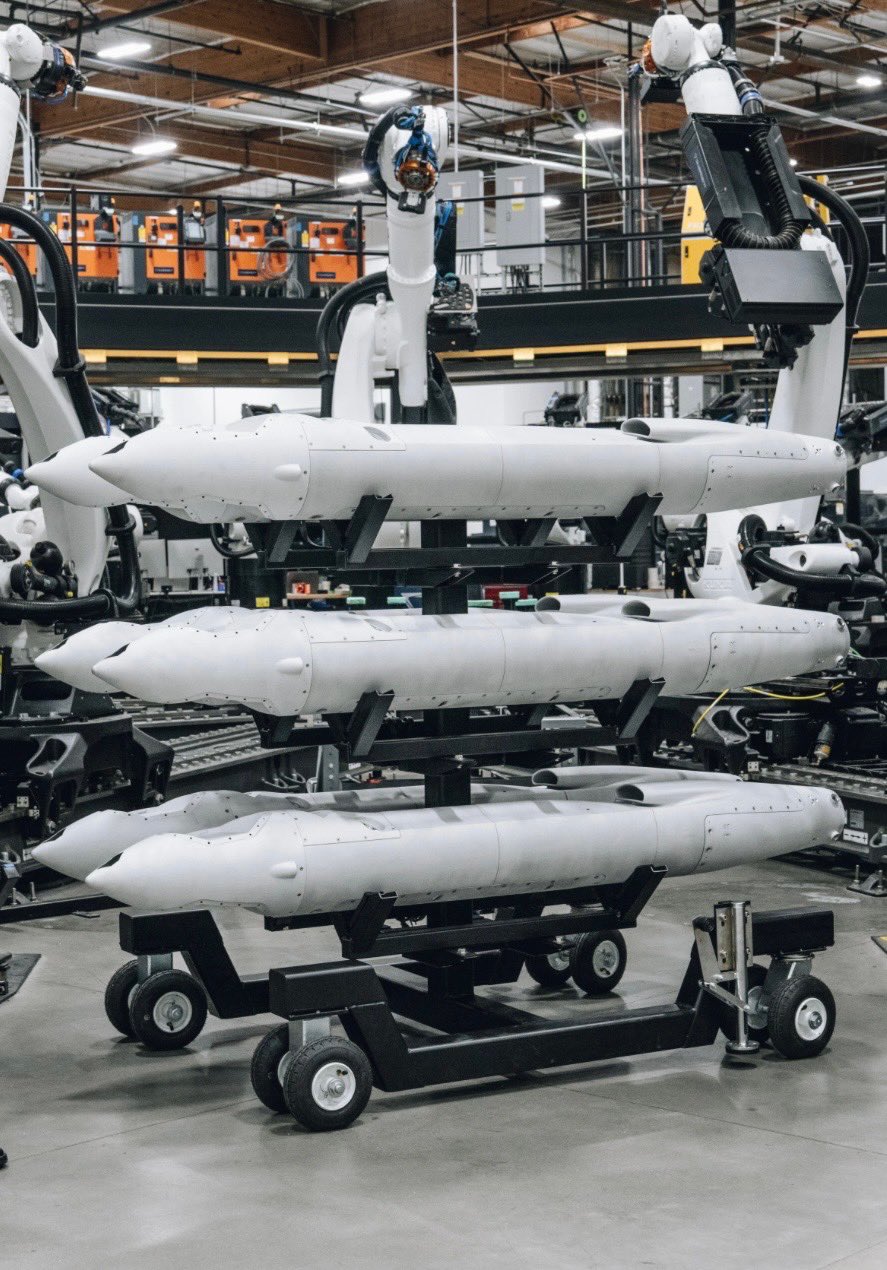
Tomahawk missile structures produced using Divergent’s digital manufacturing platform. Image courtesy of Divergent.
That also helps explain why Divergent was at the center of this year’s Reindustrialize Summit. The event brought together investors, manufacturers, startup founders, defense companies, and government leaders around one idea: rebuilding American manufacturing. It also featured a recorded message from President Donald Trump, highlighting how much attention the topic has attracted beyond the manufacturing industry.
For Divergent, the summit was a chance to show that its technology is moving into large-scale manufacturing. Because while it is best known in 3D printing circles, it is being talked about a lot for its use of digital manufacturing to help build products faster and strengthen U.S. production.
Why Divergent Fits the Thesis
At its core, Divergent is still a company built on additive manufacturing. Its Divergent Adaptive Production System (DAPS) combines software, 3D printing, and automated assembly into a single production platform. The company has spent years developing the technology for automotive, aerospace, and defense customers. But what seems to be attracting investors like Bass isn’t just the use of 3D printing; it’s the bigger idea of building products with fewer tools, shorter development times, and more flexible factories.
That may also tell us something about where additive manufacturing is headed. The industry has largely been judged on whether it could replace traditional manufacturing. Bass isn’t asking whether additive manufacturing can replace existing factories. He’s betting that companies like Divergent can help build a different kind of factory.
Subscribe to Our Email Newsletter
Stay up-to-date on all the latest news from the 3D printing industry and receive information and offers from third party vendors.
Upload your 3D Models and get them printed quickly and efficiently.