 Varun
Varun
You may be beset by a bewildering array of new Chinese cars. How can they all be viable? They can’t be, and this is the point. This is why so many brands are suddenly competing for global attention at the same time, entering overseas markets aggressively and often competing heavily on price. Jaecoo to you too. JAECOO, NIO, Xpeng, Leapmotor, Zeekr, HiPhi, Aion, Omoda, Maxus Skywell, and Deepal, it’s all a bit overwhelming, really. But why all these brands, why all these models, and how come they’re all flooding some parts of the world? To understand this, we need to look at China’s industrial policy, its history, and its growth aims. In short, how does China work?

Jaecoo SUV. Image courtesy of Jaecoo.
With 3D printing service bureaus competing aggressively for market share in China, people can often source prototypes there at extremely low prices. The intricacies and inexorable logic of the Chinese deflationary industrial policy system mean that many can bloom, but at some point, the ratcheting up of ever-larger government funding will select only a few winners to go global. Since this is tied to particular regions and cities, performance is only one element, but revenue and global relevance sure as hell count. That system is now one of the predominant models of economic growth globally. And it offers particular advantages to 3D printing now. But many businesses around the world may struggle to compete with that scale and speed. What follows is a simplified interpretation of how parts of China’s industrial system work. It won’t explain China completely, but it will be enough for you to formulate tactics from it.
Deng
China used to be so poor that in the 1960s the country barely had enough cash on hand to send its foreign minister, Zhou Enlai, and a delegation to Paris. Imagine a country of millions, with thousands of years of history, potentially bankrupted by a room service menu. It was the junior partner in a Communist alliance, but the Russians wouldn’t give it nuclear weapons and paid lip service to Chinese concerns. Later, the two countries would actively oppose one another. Famine swept the country, and central planning led to the deaths of tens of millions. In the Great Chinese Famine, anywhere from 20 to 55 million died, with 15% of the population starving to death in several provinces.
A war with erstwhile ally Vietnam made the nation feel almost alone in the world and weak. A brutal decades-long civil war and war against Japanese invasion had already devastated its infrastructure. Education was faltering, and industrial production was low. Centralized policies led to big roads, dams, and steel plants, but low-quality products and inefficiency. The Cultural Revolution had exposed deep rifts in society and alienated or exiled a managerial class. The 1800s to 1980s brought trauma after trauma, disaster after disaster. These are your memories if you’re an aging person looking back on a life in Chinese politics. From the precipice, you can see hunger, strife, destruction built on dreams. In 1976, Mao died, China had a closed economy, and reportedly, 88% of the population lived in poverty. There was a power struggle, an earthquake, and more starvation, and GDP was around $150 billion. Looking back, the scale of the crisis created the conditions for major economic reforms and a dramatic shift in direction.
Resurgence
It’s important to note that if we look at historical GDP data, China, even though its people were poor and starvation was a real issue, and it was not capable of making industrial goods as well as others in the 1900´s onwards, it had one of the world’s top five economies in GDP for the last 2000 years.
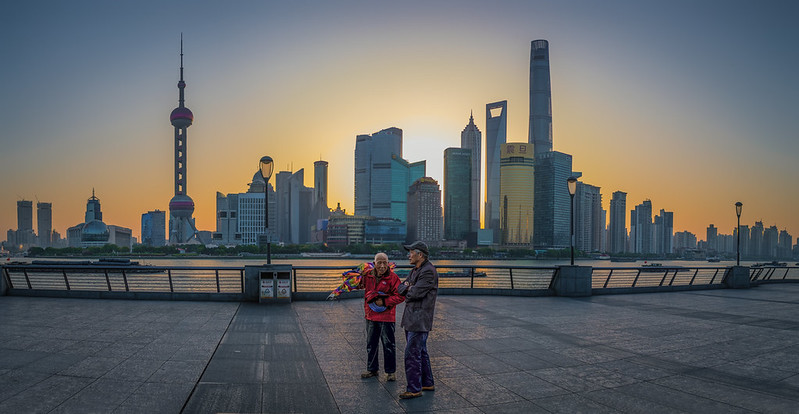
“China represented 1.61% of the world’s economy in 1987 (lowest point), rising to 18% (nominal) and 19% (PPP) in 2022. It accounted for 25.4% of global GDP in 1 CE, 29% of world global output in 1600 CE, 17.3% of the world’s economy in 1870, and 33% in 1820 (its highest point). China’s share of global GDP varied from a quarter to a third of global output until the late 19th century.[29] As of 2025, China accounts for approximately 17% of global GDP (nominal) and 19.7% of global GDP (PPP), as per IMF estimates.”
Currently, China is a dominant economic player, but it was much more dominant in the past. China, therefore, did not come out of nowhere to be the workshop of the world. This was a set of deliberate policies aimed at reclaiming its former glory in an industrial age. Previously, China had all it needed and everything that everyone else wanted, most importantly, its silk and porcelain. China wished to recover from what many in the country view as a disastrous century of invasion, instability, and economic decline.
Western Values
If this cursed century started anywhere, if the humiliations and disasters had a focal point, then this was to be found with the British and their opium. In a series of letters between Queen Victoria, her ambassadors, and the Chinese head of state Lin Zexu, the UK asks to trade with China, but China is not open to this. The UK began the large-scale import of opium into China, importing millions of kilos. This lays waste to the country and kills tens of thousands. The UK and its Western Allies then go to war with China to defend the opium trade. China ends up having to pay merchants for opium that it had destroyed, while giving up Hong Kong.
From a Chinese historical perspective, many modern international systems were first encountered during periods of colonial pressure and military coercion.
The Opium Wars and later colonial interventions remain deeply traumatic chapters in Chinese historical memory. To someone like that, things like human rights, environmental standards, standards generally, market access, regional blocs, and the rules-based order can appear less universal and more politically constructed. It’s worse still if you see erstwhile enemies gang up to create a system that increases trade barriers with the world and reduces them amongst themselves.
The Luckiest Year: 1976
Meanwhile, in 1976, it looked like China might collapse. The communist party looks vulnerable, and they’re in an economic cul-de-sac, sleepwalking from one big project to another and five-year plans focused on things like “more tractors.” The Communist Party has eradicated opium (which it previously taxed to survive), erasing a debt to history and cementing its legitimacy. But, infighting inside the party had been disastrous, with purges sending people into hard labor and leading to tens of thousands of deaths. Regional disparities and poverty in the regions and the countryside are debilitating. Local power structures predominate. Large, interconnected influence networks control cities, regions, and parts of the party and the army, vying for control.
Hu rules?
Certain Long March members, and/or their descendants, control key committees in the Army and intelligence services. From these bastions, they effectively control the country, prohibiting anyone not vetted by them from rising in rank above colonel or equivalent. This not only means that you owe your promotion to them, but also that any of your family, influence network, or professional network members can never be promoted if you cross these committees. Other family structures emerge around leaders battling for their own permanent toeholds in society. Far into the country, it’s as if the party doesn’t exist, and much of the “center” spends its time in perennial competition with other powers battling for the top spots.
Regions develop their own influence networks, local business champions, and overlapping political structures. Provinces and cities begin competing directly with one another, backing local industries and business groups while trying to block rival regions from advancing faster.
Large business groups emerge, often tied to regional power structures, state-backed industries, or influential political families. Forced joint ventures and expanding Communist Party committees within successful firms create additional layers of competing influence inside corporations themselves. Instead of functioning like a simple top-down hierarchy, China often operates through overlapping regional, political, industrial, and family networks competing for influence, investment, and growth.
Rustbelt Dust Off
OK, so let’s imagine that you’re the mayor of a rustbelt city that people would pay to avoid somewhere in the middle of nowhere. You’ve seen the play-by-play. A place gets designated as a special zone with a special focus. A localized ecosystem emerges around a given technology, sector, or product family. Investment means there is diversity in supply, services, and offerings throughout the entire value chain for that product. A place becomes the cheapest place to make bikinis, with the most knowledge on making bikinis, and the quickest, most agile bikini market in the world. Then provincial funding pits this place against the bathing-suit capital of another region, and one region wins while the other athletes either pivot to baseball or something else. Then, national funds kick in to make the top three players in your region global players. Is the bikini strategic or part of a five-year plan? Welcome to unlimited money. Smart subsidies are engineered so you can sell below cost in many markets at once. Alternatively, cycles of boom and bust are engineered through over- and undersupply to keep competition at bay (e.g., rare earths, solar panels).
Everyone knows that if you don’t chase the most revenue and particular targets, you´ll go bankrupt because all that funding will go to a rival who will demolish you with lower prices than you can make products for. So your bank loans and investor money are used to demolish other firms, not to compete for market share. It’s not about where we want to be in five years or long-term growth; it’s that we need to be the biggest this quarter and the next three, or we won’t exist anymore.
Motherland’s Milk
Now, how powerful is this cycle, this pull exactly? Powerful enough to put over 50,000 babies in the hospital and make 294,000 children sick. For years, many Chinese milk producers added melamine to milk, causing kidney failure in children. Inspectors were bribed, oversight failed, and people looked the other way while babies died. The scandal only became public after the Prime Minister of New Zealand intervened. Officially, six children died, and thousands became ill, but the true figure is likely much higher.
China, as a system, had failed to protect its people because the industrial funding mechanism had become so powerful. Producers were unable to sell milk profitably, while entire cities and regional economies depended on continued production. So corners were cut, safeguards collapsed, and industrial chemicals entered the food supply. The “rust-belt dust-off” is therefore an incredibly powerful internal growth mechanism, one capable of driving enormous industrial expansion, but also enormous pressure.
Deflation Cycle
That urgency, plus strategically placed cash to subsidize entire ecosystems, is key to this succeeding. And succeeded it has, with China growing quickly for decades. An economic miracle. And Deng didn’t just copy the Hong Kong or Singapore model to regionally reduce rules and give companies a chance to prosper. He didn’t just create super-competitive local ecosystems that could become the best in the world at very specific things. No, the greatest miracle of all is that Deng reinforced control from Beijing while directing the competitive energy between these influence networks toward international markets, while in regions uniting the efforts of erstwhile competitive networks.
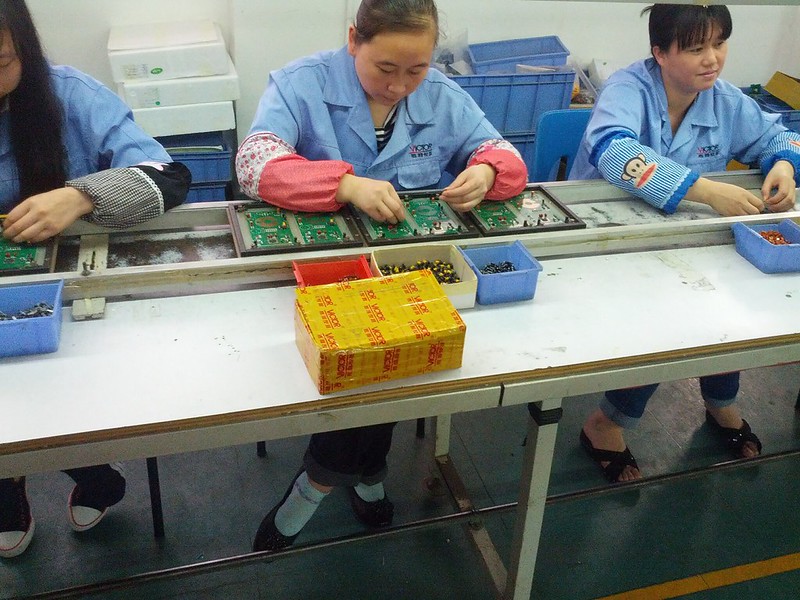
The strategy proved remarkably effective. Rooted in reality, Deng understood that by realigning interests and competition, a growth-oriented nation could simultaneously compete across many sectors globally. People think Deng’s insight concerned clusters, growth, and exports. No, to me, the true insight was in understanding how to redirect local competition toward industrial growth and export markets. It was an unusually effective way of redirecting local competition by families, bureaucrats and influence networks toward export growth. Deng changed China from a web of interconnected networks fighting over the crumbs to one of many disparate but aligned networks fighting for export growth and manufacturing prowess.
Common R&D
But, wait, how is everything going to get financed? How do we get the latest technology to our little rustbelt city? China has long faced accusations from Western governments and companies over intellectual property theft and industrial espionage, although the exact scale and organization of these activities remains heavily debated. But hoovering up large amounts of carelessly stored technology data is much easier. This is not one cat burglar in the night in the Pentagon; this is more like a horde of filter-feeding sharks sucking in everything they can through many different strategies and tactics. Any SharePoint files, any careless clicks on spyware, any lost USB sticks, any presentations, any patents, anything. Various state agencies in China do not want particular manufacturing information, they want all that is available.
Critics argue that China’s industrial system often prioritizes broad access to technical knowledge and manufacturing capabilities across multiple sectors. At some point, our local heroes will pick an industry, and our attempts to find and trade will become more goal-oriented. Maybe we’ll have a budget to help a foreigner on their China entrepreneurship journey in exchange for information, or we can pursue a JV to learn a particular key skill, or we can trade for it with another entity. But even if we don’t, we can share the information not only with the main manufacturers of a good, but also with other companies that could use an unrelated piece of technology to further their own ends. And if we share the plans for a machine with the entire ecosystem, everyone can build the same machine cheaply, focusing either on manufacturing it as cheaply as possible or on improving the go-to-market strategy.
Meanwhile, suppliers know which plastics, parts, and assemblies are needed for the new device that everyone will make. With everyone knowing what will be made, everyone can focus on the relevant cost factors for just that device to reduce them. With everyone knowing what all competitors know, better go-to-market, regional specialization, and customized offerings for particular customers are encouraged. Hustle and gumption are also encouraged, since you know everyone else has the same CAD files and the clock is ticking. This kind of ecosystem-level coordination helps explain how Chinese manufacturing clusters can scale and move so quickly.
I’m not saying that this is what all Chinese companies do. Not every Chinese company operates this way, and many firms invest heavily in their own R&D. But critics argue that shared industrial ecosystems and technology transfer have played a significant role in the country’s rapid manufacturing growth. In some cases, critics argue that rapid cloning cycles can lead manufacturers to reproduce both the strengths and weaknesses of earlier systems without fully understanding the underlying engineering. With the common research shared, there is money left to value-engineer, specialize, do sales and marketing, cut prices, and work on go-to-market. It’s not that the government supports firms through money, but it supports winners through money. But all in a particular cluster, city, region, or influence network get access to the same R&D. It’s not that they all have the files; it’s that they know everyone else does, too.
Rustbelt Real Estate
Once your cluster is up and running and your region wins, it’s Sim City time. Companies buy land for factories, workers buy apartments, owners invest, and a real estate bubble forms tied to that particular cluster and influence network. Land sales fund local governments. Local success builds careers. More entrepreneurs, more companies, more populace, means more support for your influence network. If your network gets promoted, you will be able to pour more capital into your region and clusters. More workers mean shopping centers, stadiums, museums, and relevance. Your rustbelt will be sanded down, and begin to shine again. People will flock there to open restaurants, deliver meals, and start more businesses that support your cluster or cater to the staff. Everyone in lock step is tied to the future of the one best place in the world to manufacture motors. Thousands of clusters form and reform, fail, die out, and bloom. Hundreds succeed in attracting investment while the cluster collectively seeks the next tier up on the technology tree.
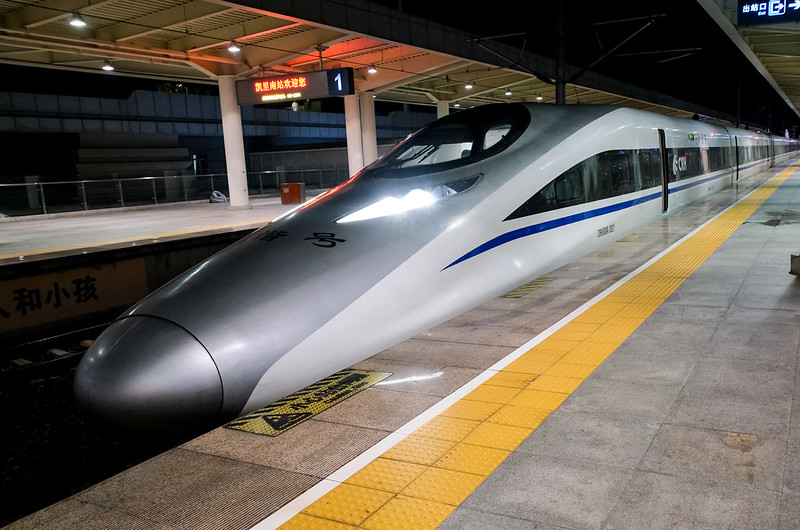
This is not a uniquely Chinese phenomenon; most places work more or less the same. Only where the rest of the world waits for pearls to grow on oysters, China is creating cultured oysters on demand. It would be misleading to think of China as a country. China is not a neat, top-down organizational chart. It’s a squiggle of competing interwoven influence networks. A plate of noodles.
But by hoovering up all the world’s available company data and doubling down on clustering, the country’s goals are clear: it would like to dominate every supply chain for every important technical good. For China to become a true global power, it must not make some things better and more profitable than others some of the time. For its path to succeed, it needs to make all things, all the time, faster, better, and cheaper than anyone else. An above-average interest in dominating 3D printing is therefore to be expected.
Farms For Growth
In Europe, we subsidize milk companies and farms ($55 billion); in America, farming ($44 billion), oil ($30 billion), and military spending (over $1 trillion). China instead focuses on subsidizing industrial clusters to make one place the most logical and competitive for a product or family of products. Critics in the West have increasingly argued that large corporations and wealthy individuals often benefit disproportionately from existing tax and subsidy systems. China then uses those clusters to compete aggressively in global export markets, often with pricing levels many foreign competitors struggle to match.
Images courtesy of Axel, Mark Lehmkuhler, Francisco Anzola, Alicia Gibb, and Steve Jurvetson, unless otherwise noted
Subscribe to Our Email Newsletter
Stay up-to-date on all the latest news from the 3D printing industry and receive information and offers from third party vendors.
Upload your 3D Models and get them printed quickly and efficiently.