3D Printing News Briefs, October 24, 2026: Spinal Implant, Digital Dentistry, Recycled PLA, & More – 3DPrint.com
 Varun
We’re starting with a little business in this weekend’s 3D Printing News Briefs, and then moving on to FDA 510(k) clearance and digital dentistry. We’ll end with 3D printing waste recycling and a DIY-creator app for personalized 3D models.
India’s Objectify Technologies Acquires Roboze ARGO 500 HYPERSPEED
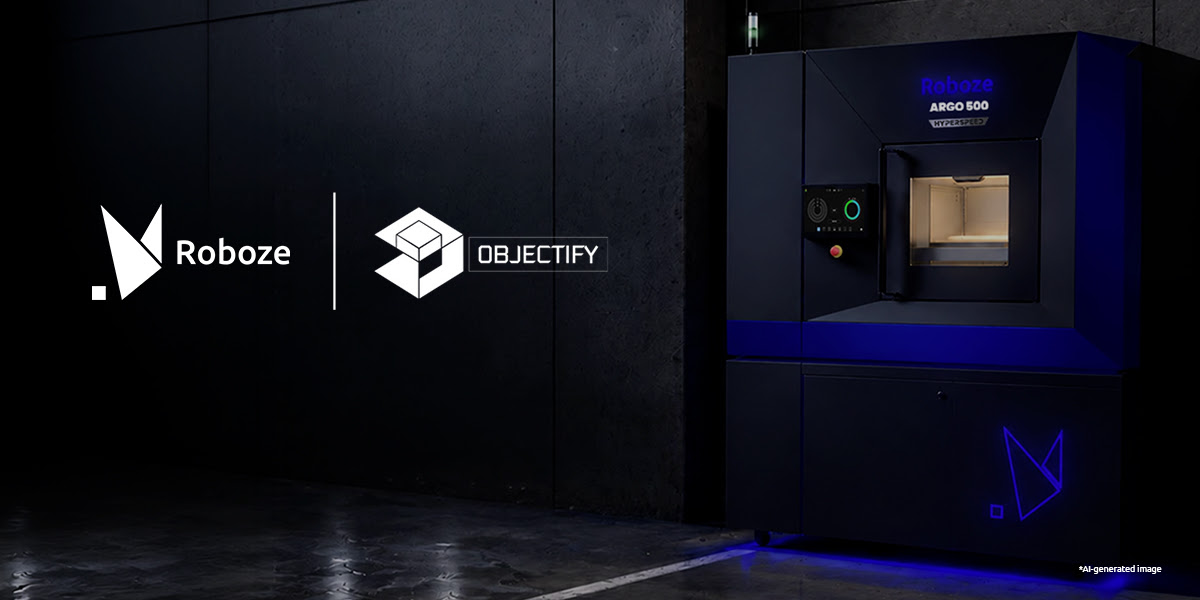
Italian additive manufacturing (AM) firm Roboze, working to build the Physical AI backbone for autonomous manufacturing in strategic industries, announced that it’s expanding its manufacturing network by partnering with Objectify Technologies, an AM service provider in India. Objectify has acquired a Roboze ARGO 500 HYPERSPEED system for printing high-performance polymer and composite components for industrial applications in the demanding industries it supports, including automotive, aerospace and defense, energy, and space. This will grow the range of applications it can address for its customers, including ones where process control, material performance, and repeatability are critically important. For Roboze, this collaboration with Objectify is just one more step in its international expansion, allowing its technology to get to customers in India for more localized, resilient production.
“This partnership is an important step in expanding access to advanced manufacturing capabilities across Aerospace, Defense, Energy and other critical industries in India,” explained Roboze Founder and CEO Alessio Lorusso. “Objectify brings deep manufacturing expertise, engineering capabilities and a strong understanding of the local industrial ecosystem. By combining these capabilities with Roboze technology, we can support companies in producing high-performance components closer to the point of need, reducing supply-chain complexity and accelerating the transition toward more autonomous and resilient manufacturing.”
Providence Medical Technology Gets FDA 510(k) Clearance for CORUS PCSS 3D-T
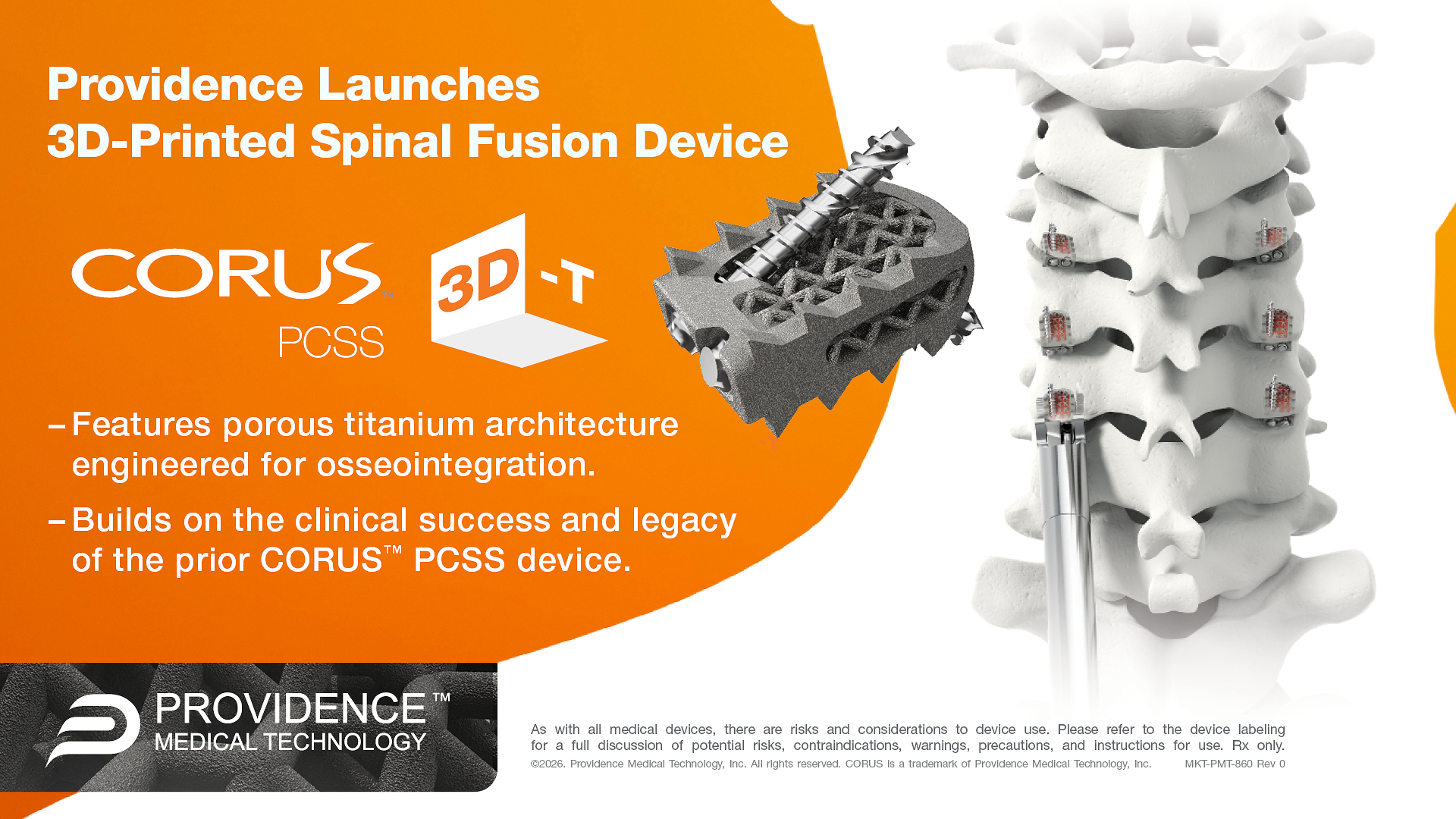
CORUS™ PCSS 3D-T, Providence Medical Technology’s next-generation posterior cervical implant, pairs a 3D-manufactured porous titanium architecture engineered to support bone ingrowth with the clinically proven CORUS™ PCSS design.
Providence Medical Technology, specializing in Total Segmental Fusion to stabilize all three spinal joints, has received FDA 510(k) clearance for its CORUS Posterior Cervical Stabilization System 3D-T (CORUS PCSS 3D-T). This posterior cervical implant, with integrated screw fixation, pairs the CORUS PCSS design with 3D printed porous titanium, which helps to support bone ingrowth and fusion. The CORUS PCSS 3D-T, supported by a Level 1 randomized clinical trial (NCT04229017), is used to help immobilize and stabilize the spinal segments, along with posterior cervical fusion (PCF) surgery in patients with cervical degenerative disc disease. The 3D printed titanium lattice mimics cancellous bone, and is shaped to match patient anatomy. The device provides support and uniformly distributes load during surgery, and also holds the bone graft packed inside. The CORUS PCSS 3D-T is just the latest in a long line of 3D printed medical devices, including spinal implants, to get 510(k) clearance from the FDA.
“Clearance of CORUS PCSS 3D-T is an important milestone for Providence and for the surgeons who rely on our platform. CORUS is backed by Level 1 evidence that’s rare in spine, and 3D-T brings the porous titanium surgeons increasingly expect to that proven foundation,” said Lane Major, the President and CEO of Providence Medical Technology. “It’s the next step in our commitment to Total Segmental Fusion and to helping surgeons deliver predictable fusion with fewer revision surgeries for their patients.”
SprintRay Unveils Expanded Digital Dentistry Platform
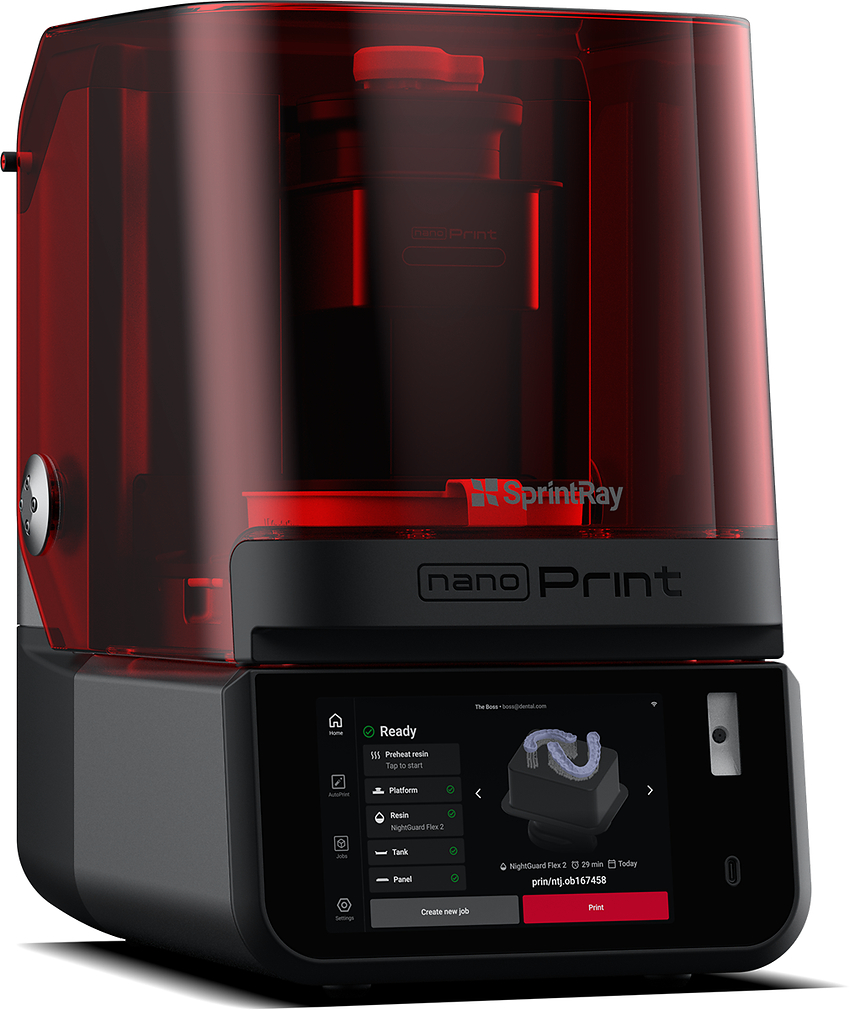
SprintRay NanoPrint, a compact dental 3D printer designed to bring high-quality 3D printing workflows directly into the dental practice.
At its recent 3DNext 2026 in Miami Beach, dental technology company SprintRay unveiled an expanded, connected digital dentistry platform. This goes beyond dental 3D printers, and extends the workflow from design and scanning all the way to post-processing. First, SprintRay has introduced Foundation, a full-color, wireless intraoral scanner built for its ScanOS software layer integrated with cloud dashboard. Foundation simplifies things by bringing scanning into the same interface used for design and production. Next, the new Nano Series was built specifically for compact chairside workflows, based on the insights SprintRay has gained from producing over 20 million dental parts. Supporting a wide range of clinical applications, the series starts with the NanoPrint printer, which uses a 385 nm light engine. Then, NanoWash automates washing and drying, and NanoCure finishes the post-processing. AutoPrint and Job Handoff connect the steps and carry the information through the workflow. Finally, SprintRay and GC Corporation announced an expanded materials partnership, and launched GC GRADIA® PREMi, a new hybrid ceramic restorative resin for the SprintRay Midas Digital Press workflow.
“For years, we connected scanning and printing through third-party integrations, but the experience still required practices to move between systems. ScanOS makes scanning a native part of the SprintRay workflow, and Foundation is the first intraoral scanner built for it. With Nano Series, we have designed the print, wash and cure experience around the way chairside dentistry actually works,” said SprintRay Co-Founder and CEO Amir Mansouri, Ph.D.
UdeM Initiative Transforming Plastic 3D Printer Waste into New Filament
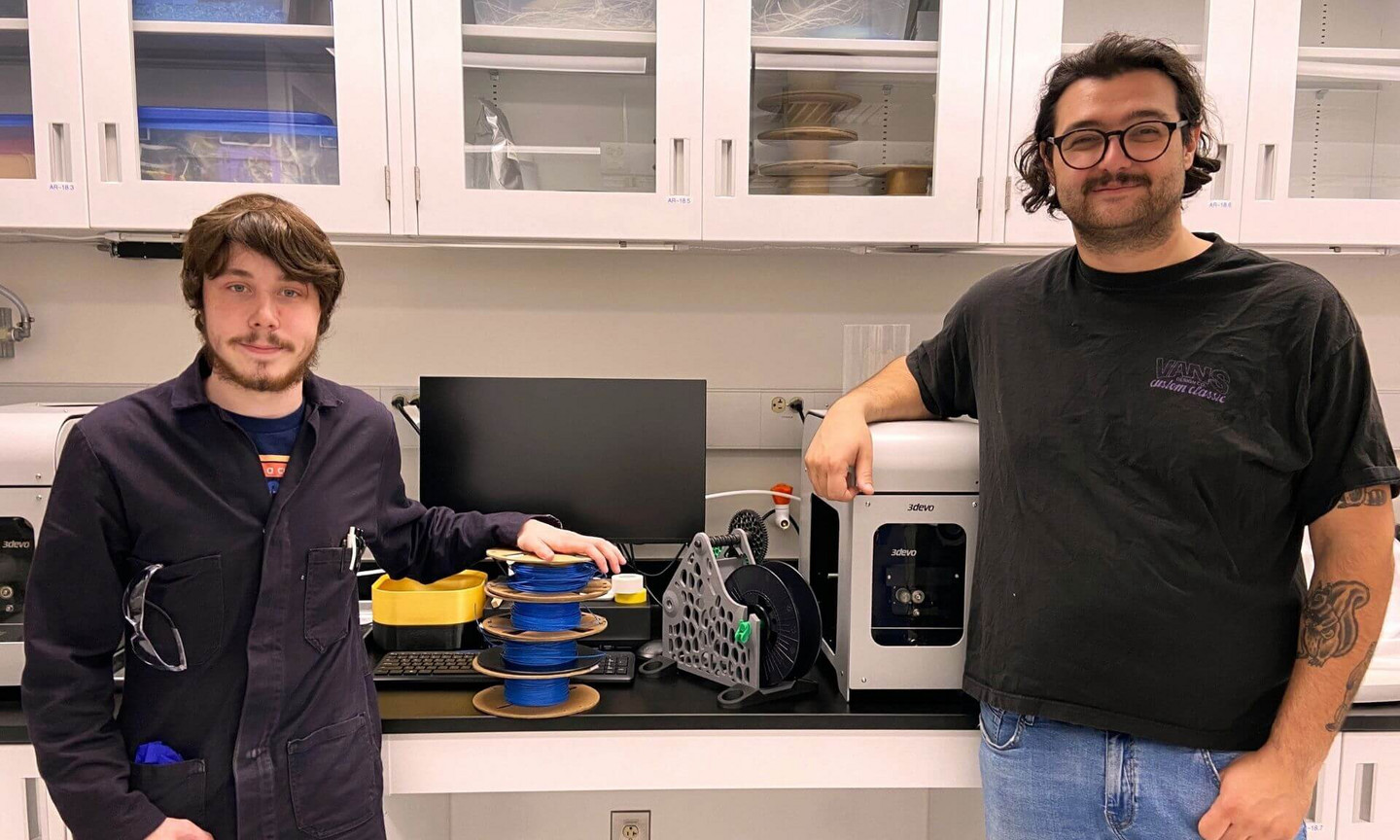
Guillom Coulombe and Tristan Perodeau, members of the FilUM team. Photo: Stéphanie Poirier, UdeM
The Université de Montreal is increasingly using 3D printing in its research laboratories and the libraries’ digital fabrication workshops, but the scrap material has been slowly piling up in boxes. Now, under the FilUM initiative launched last year, that waste is being shipped to the laboratory of Department of Chemistry professor Audrey Laventure to be recycled and turned into filament. The project was launched with the backing of the Office of the Vice-Rector for Research and Innovation’s environmental responsibility research fund, and this year got a grant from the Royal Society of Chemistry’s Sustainability Fund. PLA is technically compostable, but it has to be composed in specialized facilities, which Stéphanie Poirier, a research advisor and member of the project team, says are few and far between in Quebec. Thanks to FilUM, more than 40 kg of printer scraps have been collected through the library system and recycled. The team also reuses the empty spools, rewinding the recycled filament on them and sending them back out to be reused within the university, mostly for prototyping purposes. The extruders and shredders needed to recycle the filament are expensive, and the cost would have been difficult to justify for just one lab. But by taking all the printer scrap from across the whole campus made the investment worth it.
Poirier said, “With a campus-wide initiative, we can collect enough scraps to produce full spools of filament, which makes FilUM’s equipment cost-effective.”
Drzach&Suchy Launch Creator App for Shattie Cubes
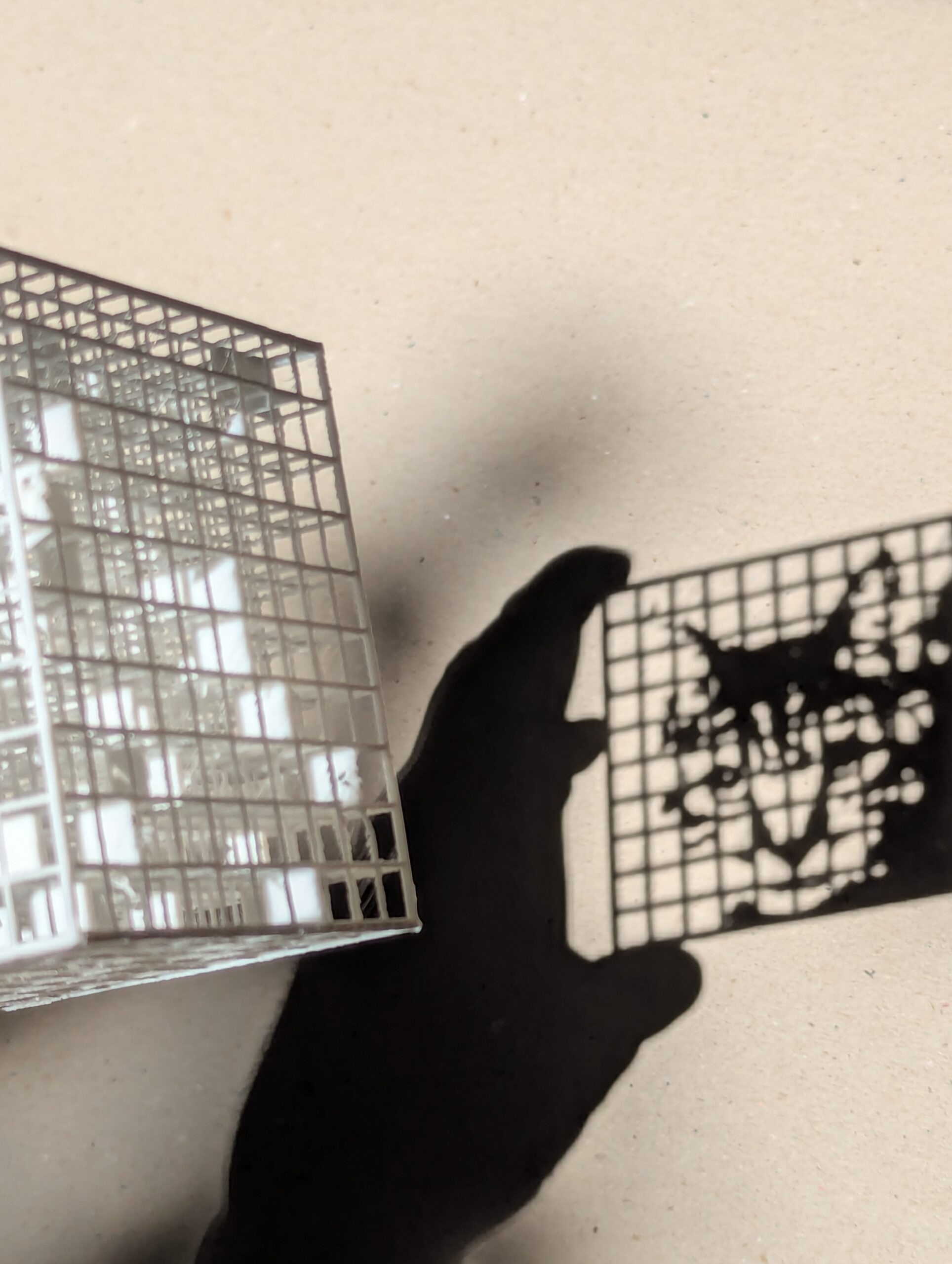
It’s been several years since we’ve written about the work of Swiss design studio Drzach&Suchy. Based in Zurich, Drzach is an architect, and Suchy is a cryptographer software engineer, and they use 3D printing to create interesting works of art. Many years ago, Drzach developed shadow casting panels (SCP), a novel technique that enables you to store and present multiple images using just one single physical object. Now, they’ve launched a DIY creator app for personalized 3D models they call shattie cubes, based on shadow clouds, that “hides” three distinct images. It’s basically an optical illusion: when you rotate the cube or look at it from a different angle, details align to form the hidden image. When you shine a light through the cube, your images are cast onto the surface behind you, like a projector. You can get the app here, and it looks fairly self-explanatory—upload your images, adjust the granularity and darkness of each one, and click “Build Shattie Cube.” Once you’re satisfied, you can purchase what you’ve created! Drzach&Suchy have activated a coupon, ShattieCube-3DPrint.com, that gives you a 25% discount on your models through the end of this month if you want to try it out yourself!
Subscribe to Our Email Newsletter
Stay up-to-date on all the latest news from the 3D printing industry and receive information and offers from third party vendors.
Upload your 3D Models and get them printed quickly and efficiently.