Ingredients for Transforming 10+ Industries into the Next Generation of Manufacturing – 3DPrint.com
 Varun
Varun
The future of manufacturing will not be shaped by a single breakthrough in technology. Instead, it will be defined by a powerful combination of four essential ingredients that, when applied together, have the potential to transform more than ten industries at once — from aerospace, defense, energy, and mobility to healthcare, electronics, consumer products, and beyond. Companies across sectors face short innovation cycles, stronger global competition, supply chain disruptions, and rising demand for sustainable and circular production. The organizations that will lead in this new era are those capable of orchestrating the right technologies and the right collaborations across the value chain.
In our work with customers, partners, and ecosystems such as America Makes in the United States and Bavaria Makes e.V. in Europe, one insight has become very clear: next‑generation manufacturing emerges only when companies, academics, and politics work closely together to make the future happen rather than in isolation.
The first ingredient is an open, interoperable technology stack that forms the digital backbone of modern industry. It connects design, engineering, simulation, automation, and production through a continuous digital thread. With executable digital twins and a governed data foundation, companies can move from concept to certification‑ready production faster, with greater predictability and cross‑industry compatibility. The openness and interoperability of this stack ensure that machine builders, suppliers, OEMs, research partners, and startups can collaborate without technological lock-in, which is essential for scale. Siemens partners with companies like Nvidia, Microsoft, and AWS to make these digital twin experiences immersive, working together across locations and different functions at the same time.
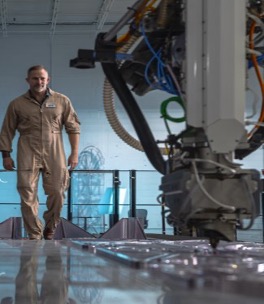 The second ingredient is Industrial AI, which acts as a force multiplier across every stage of innovation and production. Within each engineering or manufacturing tool, Co‑Pilots and embedded AI capabilities will make professional workflows faster, more intuitive, and far more accessible. Above the tool level, AI Agents will increasingly orchestrate entire multi‑step workflows across the toolchain. An engineer, factory manager, or planner will no longer need expert‑level mastery of every specialized application; instead, AI Agents will guide, coordinate, and adapt workflows in real time. This evolution enables more agile, adaptive, and responsive operations, laying the foundation for true lot‑size‑X production — achieving the same economies of scale and profitability traditionally associated with mass manufacturing, while retaining the flexibility of individualized or rapidly changing production.
The third ingredient consists of robotics and additive manufacturing as fully digital‑native production methods. Robotics brings flexibility, speed, and resilience to factory operations, enabling local‑for‑local production and adaptive automation. Additive manufacturing becomes a natural part of engineering and production — designed directly from the digital thread, simulated before printing, integrated with subtractive and post‑processing steps, and scalable from a single machine to an entire factory. AM only reaches its transformative potential when it is woven into the broader digital and automation landscape, rather than treated as a standalone specialty.
The fourth and often underestimated ingredient is the ecosystem along the value chain. No single organization can industrialize AM or next‑generation manufacturing on its own. True progress happens when material suppliers, machine OEMs, software and automation providers, research institutes, government agencies, startups, and end‑user industries collaborate closely. Ecosystems like America Makes and regional alliances such as Bavaria Makes e.V. in Germany accelerate qualification processes, strengthen supply‑chain resilience, develop the future workforce, and speed up the transfer of technology across industries. They amplify innovation far beyond what any individual company could achieve on its own.
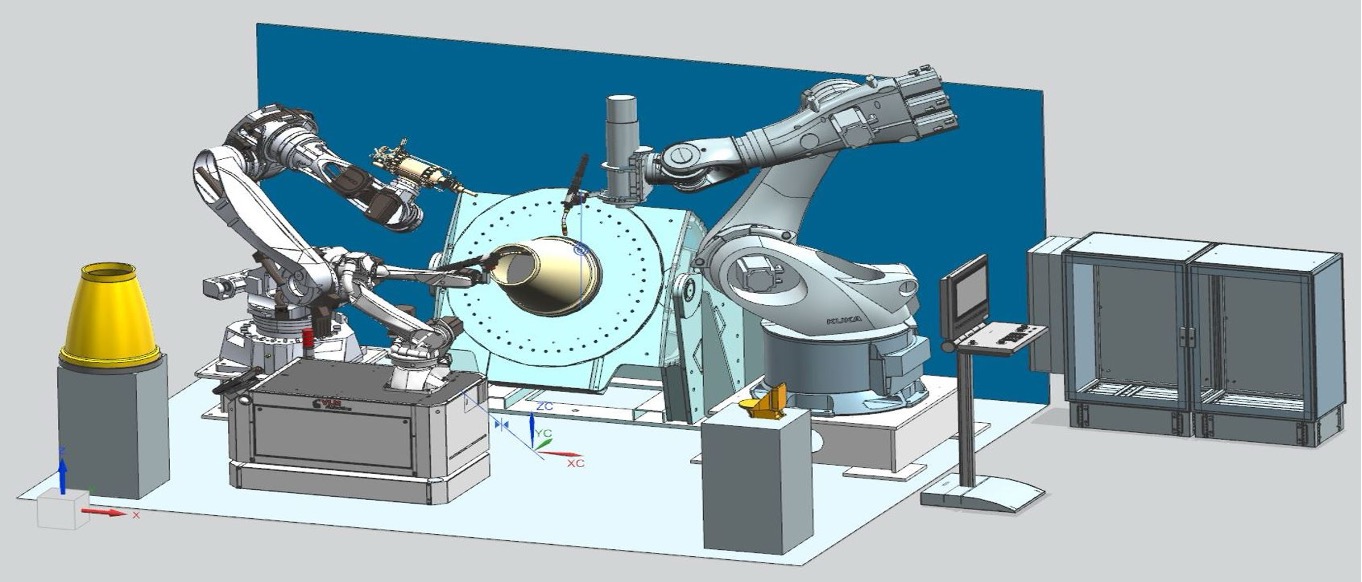
Together, these ingredients enable the shift from isolated pilot projects to scalable industrial production enabled by additive manufacturing, from linear supply chains to adaptive manufacturing networks, and from incremental improvements to exponential progress. This is the recipe for the next generation of manufacturing — and the reason more than 10 industries are converging on the same transformation model.
Siemens is a Gold Sponsor of Additive Manufacturing Strategies (AMS) 2026 (AMS 2026), which will take place in New York City from February 24–26. The event will bring together leaders from across the additive manufacturing industry to discuss technology, strategy, and real-world adoption. Learn more and register at AMS 2026.
About the Authors:
Steve Vosmik is part of Siemens, where he works closely with customers and partners on additive manufacturing adoption and digital manufacturing strategies. His work focuses on helping organizations connect design, production, and automation to support scalable, real-world use of additive manufacturing across industrial environments.
Karsten Heuser is a senior leader at Siemens, where he is responsible for driving additive manufacturing strategy and ecosystem development. He works at the intersection of software, industrialization, and industry collaboration, focusing on advancing the adoption of additive manufacturing across production, supply chains, and digital workflows.
Subscribe to Our Email Newsletter
Stay up-to-date on all the latest news from the 3D printing industry and receive information and offers from third party vendors.
Upload your 3D Models and get them printed quickly and efficiently.