WASP Mixes Earth and Plastic to Make Recyclable 3D Printed Composites – 3DPrint.com
 Varun
WASP has an eco-friendly ethos. Indeed, the firm wants to build houses and communities using local, environmentally friendly, and sustainable materials. WASP works with ceramics, biocement, and earth. The company has a huge modular WASP Crane system but also wants to work on a village and has started by wanting to print houses in developing countries. Now the company will tackle another challenge with composites. Composites are amazing materials that can perform well. But usually they’re made of nasty resins and fibers. Production poses environmental risks, and afterward they’re impossible to recycle meaningfully. Now the company has combined two of its processes, Fused Granulate Fabrication (FGF) and Liquid Deposition Modeling (LDM), into a patent-pending dual-extrusion process to make more sustainable composites.
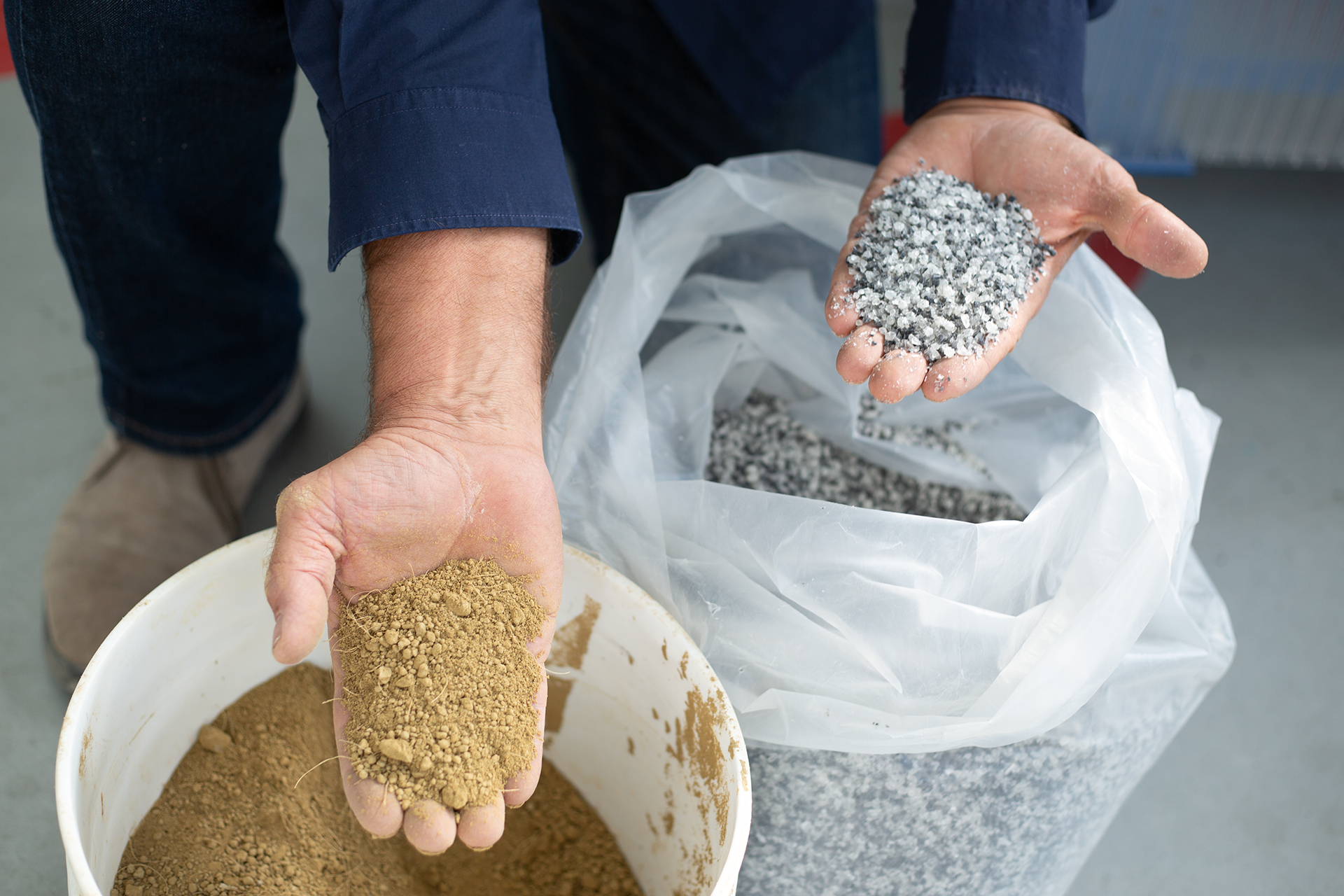
Earth and plastic materials used in WASP’s new dual-extrusion 3D printing process. Image courtesy of WASP.
The dual extrusion process extrudes earth and plastic, allowing you to reinforce an earth matrix with plastic. It switches between the two processes layer by layer, adding plastic reinforcement to the earth structure. This lets you print overhangs, more complex shapes, and stronger geometries that would otherwise collapse during printing. Once the building reaches the end of its life, you can remove the plastic from the earth for recycling. The earth can also be reused.
The firm noted that,
“The result is a different way of thinking about composite materials: not as a permanent combination, but as a reversible system in which each material can be separated and recovered at the end of the object’s life. The first tests of this patent-pending technology are already underway, and there is still plenty to explore. The WASP team is continuing to develop and refine the system, and we look forward to sharing more results, applications and developments as the project takes shape.”
I tried to do something similar by combining hemp with PLA in filament and pellets. A BLADE2CIRC project is underway that aims to use reversible chemistry to recycle the enormous composite blades of wind turbines. They’re also studying reversible click chemistries. Fraunhofer was looking at more sustainable fibers made from lignin and cellulose. Toray has bio-circular carbon fiber, with Bio-circular acrylonitrile (AN).
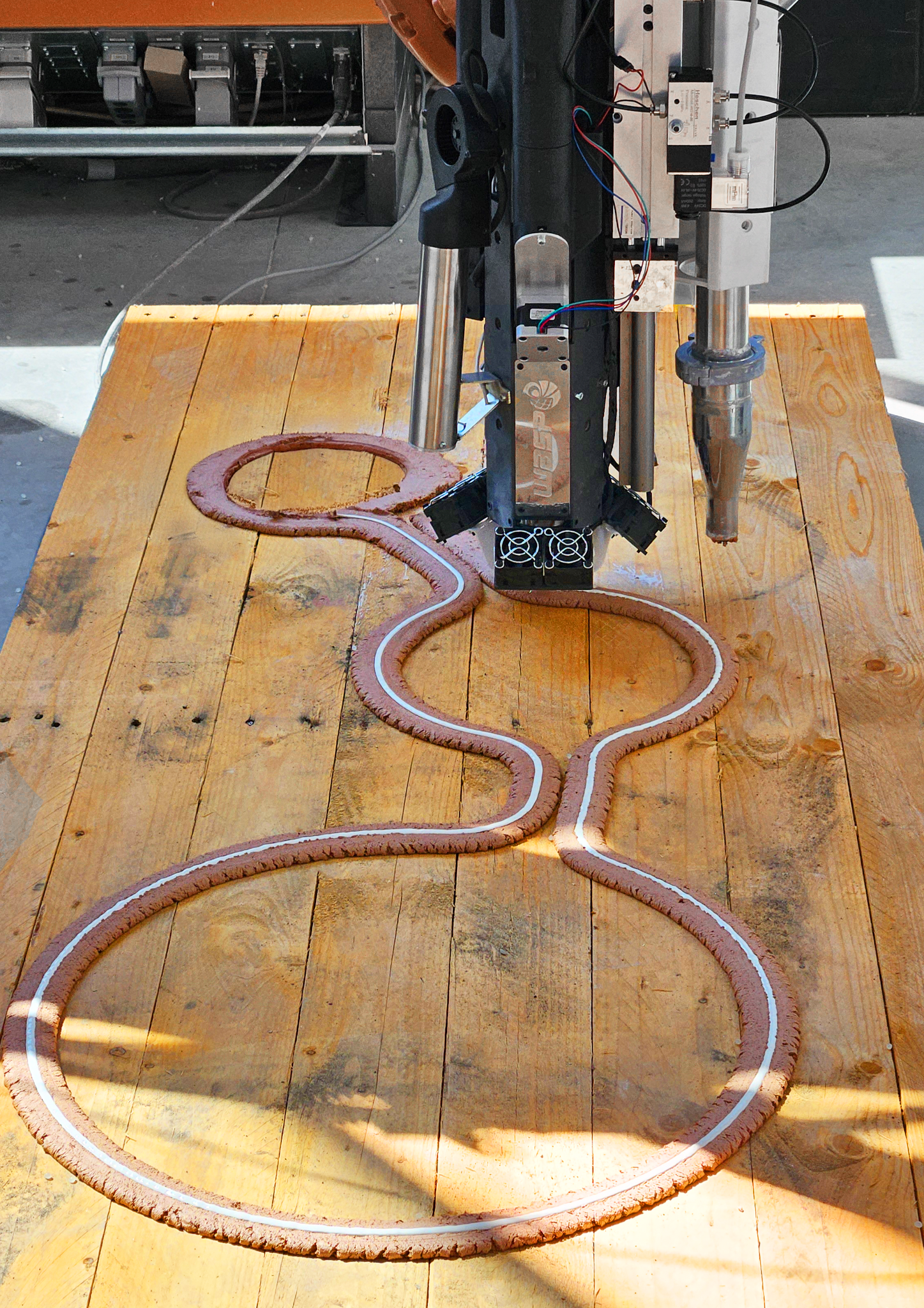
WASP’s dual-extrusion system combines earth and plastic reinforcement in a single 3D printing process. Image courtesy of WASP.
But there’s something especially ingenious about WASP’s approach that I really like. Usually I like elegant, simple things. But this is elegant and a bit rough around the edges. And in that sense, I love that it works, but you somehow have to rip it apart. I could really see this being used for temporary buildings. Imagine something like a festival or some school building that has to fill a gap for six months. For things like this, this could be interesting. As a broader building method for outdoor buildings that last a long time, it could have real impact. I’m not sure what level of strength this method could achieve. But with this general idea, many other ideas would be achievable as well. Imagine extruding PCL with the soil, for example, to bind it together with a very elastic, very strong bond. Or imagine designing custom infill structures and then varying the amount of earth in them. I’m not sure if this will work, but it will lead to some pretty interesting experiments. Probably the earliest composites humans used were clay bricks with straw inside. This is also a much more sustainable solution than what we have today. It is also reversible. Maybe we too should make things with clay and straw again?
Subscribe to Our Email Newsletter
Stay up-to-date on all the latest news from the 3D printing industry and receive information and offers from third party vendors.
Upload your 3D Models and get them printed quickly and efficiently.