Chromatic 3D Materials Opens Propellant Test-firing Site in Minnesota – 3DPrint.com
 Varun
Varun
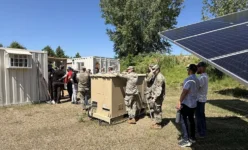
Chromatic 3D Materials has inaugurated a test firing site at Camp Ripley in Little Falls, Minnesota. It’s a 210 square kilometer Minnesota National Guard site used for training service members from many branches of the U.S. military, as well as local police and units from countries like Norway. Chromatic will take a five-year lease for testing and hopes that this will let it “rapidly develop, validate, and scale next-generation propellant technologies in support of national defense priorities.”
Chromatic arranged this through the Defense Innovation OnRamp Hub and Minnesota National Security Ecosystem. In addition to rockets, the company will work with auxiliary power firm LEMA and the U.S. Army Corps of Engineers to investigate using its materials technology for power generation. This is an interesting idea that could lead to safe fuel which could be transported easily and then used whenever needed. The main thrust of the lab will be in propellant testing, including live fire testing. Chromatic hopes to look at solar power generation in combination with their testing to showcase remote off-the-grid production of propellant.
Matt Hickey, managing director of OnRamp Hub Minnesota, said,
“Commercial companies often have promising technologies but need access to the right partners, facilities, and testing environments to demonstrate their capabilities and move forward. Our role is to help make those connections, reduce barriers to testing and evaluation, and create pathways that accelerate getting commercial technologies into the hands of the warfighter. The collaboration between OnRamp Hub: Minnesota, Chromatic, LEMA, Camp Ripley, and the Minnesota National Guard is a strong example of what that can look like in practice.”
Chromatic 3D Materials CEO Cora Leibig said,
“Development and manufacturing speed are critical in modern defense, Our presence at Camp Ripley allows us to rapidly demonstrate performance, validate manufacturing approaches and reduce the time required to deliver advanced propulsion solutions to rocket manufacturers.”

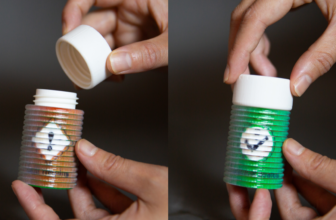
Chromatic 3D achieves breakthrough in 3D printed rocket propellant.
The firm hopes that it can iterate faster, work to Department of War standards, and demonstrate its propulsion solutions. Chromatic hopes to scale production for tactical and strategic platforms as well. The firm was initially focused on its RX AM process for elastomeric products such as grommets, cushioning, and industrial parts. Now it has shifted focus very much to rocket propulsion.
Chromatic’s machines are not expensive, and the company is looking to scale low-cost material systems. It could easily do very large-scale production for rocket propulsion, which is a critical need for the U.S. at the moment. The country has precision air defense and precision long-term munitions at the moment. The U.S. can not realistically offer force protection in the Persian Gulf, nor can it protect its allies. In a world where thousands of missiles and drones strike the Ukraine every week, the U.S. has been caught flat-footed. Its Patriots are crucial, but they are in short supply, THAAD systems work well, but there are simply not enough of them, and they’re all too expensive. In order to protect forces from drone swarms, the U.S. will need to scale inexpensive missile and drone production into millions of devices.

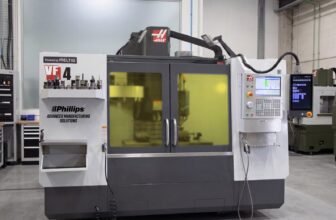
Chromatic 3D printing.
Chromatic’s timing is therefore excellent. and the firm joins Firehawk, Ursa Major, and others in trying to scale the production of solid rocket motor propulsion. Xbow has gotten $97 million to develop solid rocket engines, while Prometheus is building a factory. Meanwhile, a lot of funding is going into scaling up vehicle production and research into materials. Chromatic got a Stage II SBIR award for $749,000 to create an elastomeric production system in 2019. Solid rocket motors could be used for rocket boosters, upper stage rockets, ICMBs, SAMs, air to air missiles, and more. L3 Harris’ GMLRS extended artillery units use solid rocket motors, as does the Minuteman III and the U.S. Navy’s SM, Northrop’s power part of the Artemis mission, and the $30 billion Ground Based Missile defense program, as well as the Pac3 Patriot. Raytheon’s AIM 9 and Lockheed’s ATACMS also use it. Everywhere the U.S. wants to reach out and touch someone, or where it wants to defend itself, solid rocket motors play an important role. From extended artillery to anti-air and intercontinental, solid rocket motors are the Forrest Gump of the US defense establishment. What’s more, theoretically production is much faster than if you had to print or forge parts for turbofans. And with fewer moving parts, assembly and integration could be faster as well. So Chromatic is maneuvering itself into a very strategic place and a confluence of a lot of potential.
Images courtesy of Chromatic 3D
Subscribe to Our Email Newsletter
Stay up-to-date on all the latest news from the 3D printing industry and receive information and offers from third party vendors.
Upload your 3D Models and get them printed quickly and efficiently.