Excellent Desktop Injection Molding, Made in Italy by Robot Factory – 3DPrint.com
 Varun
Varun
I was captivated when I saw my first Robot Factory 3D printer. The robust, precise machine was built to last. And this was in an era of very flimsy, disposable, non-working 3D printers. Here was a well-made, Italian-made, 3D printer that was beautiful and built like a machine tool. I’ve always loved their stereolithography (SLA) and material extrusion systems. Founded by Andrea Martini in 2006, the Mirano, Venice-based company makes bench-top injection molding equipment and 3D printers.
The company got started making fun robotics learning tools for kids, then made CNC machines before expanding into 3D printers and injection molding. We asked Andrea about Robot Factory and how the company has evolved. First, it’s rather surprising to find that now the company has a product line in injection molding. So, why the focus on injection molding?
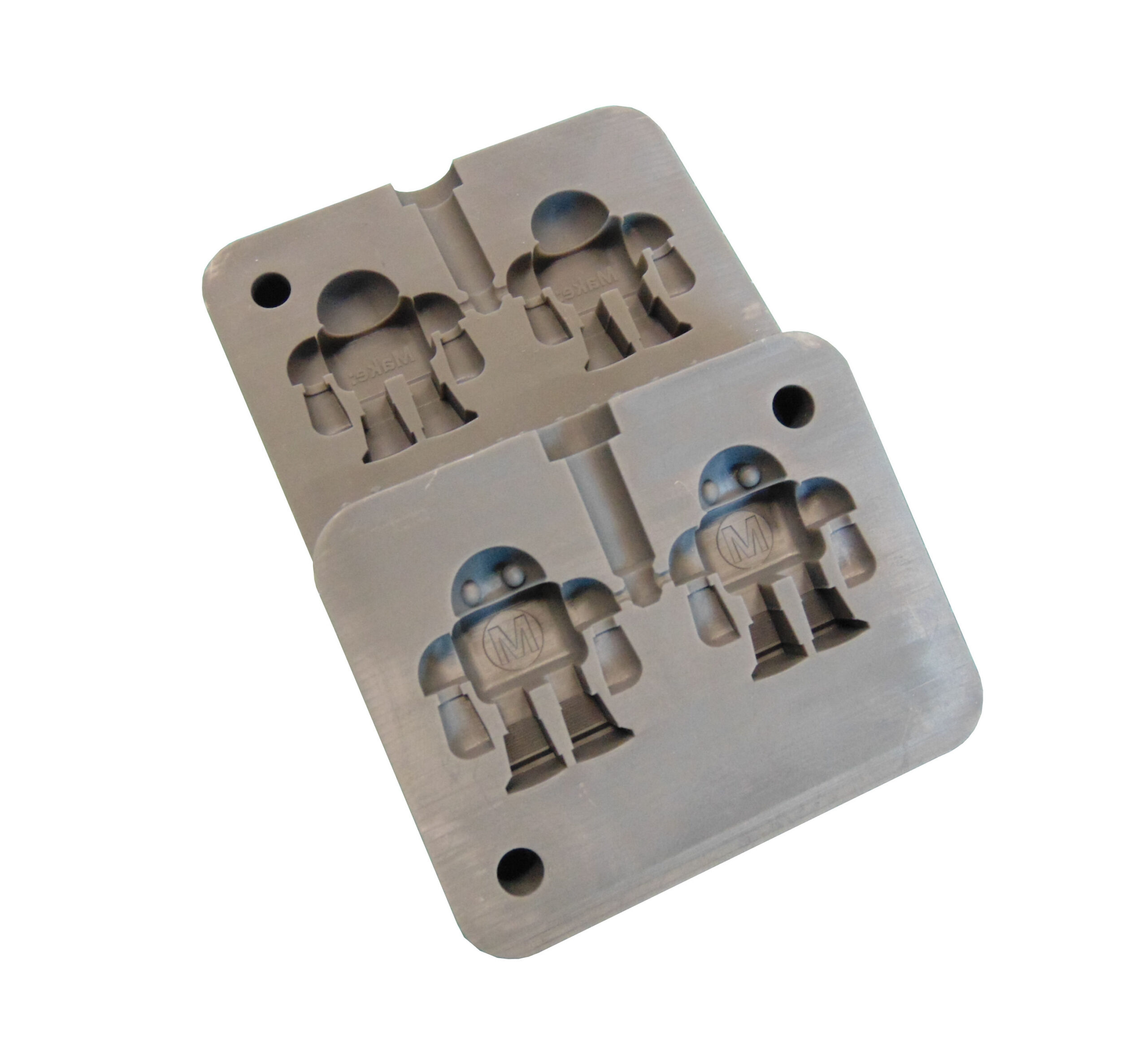
It stems from customers’ requests for very small parts with very high resolution and very fast lead times. This was not possible with any type of 3D printing, only with injection molding.
“Although 3D printing has revolutionized prototyping and low-volume production, it becomes less efficient when producing large quantities of small parts with precise, uniform details. Printing each component individually is time-consuming, and production speed quickly becomes a limiting factor as volumes increase. Injection Molding offers a practical solution to this challenge. Once a mold is available, it allows for the rapid production of thousands of identical parts, with excellent surface quality and repeatable precision. This makes it particularly suitable for small components, where consistency and efficiency are essential,” says Andrea.
Yes, we sometimes get caught up in our 3D printing world. And in many cases, injection molding is far away in China, and it’s easy to see it as low-cost but inefficient. Robot Factory, however, has a bench-top pneumatic injection molding unit that lets you turn 3D printed inserts into quick series in a small space.

Andrea goes on to tell us, “Injection Molding is one of the most widespread and scalable manufacturing processes in modern industry. For a company like Robot Factory, which operates in the field of robotics and automation, Injection Molding represents an ideal environment in which robots, automated handling systems, and intelligent production cells can significantly improve productivity, quality, and repeatability. The first approach was to develop a very simple, easy-to-use system accessible to any laboratory, wherever a simple desk was available to house the system, with a small, simple, and inexpensive air compressor.”
I really like this approach to building a system that could be very compact yet reliable to use.
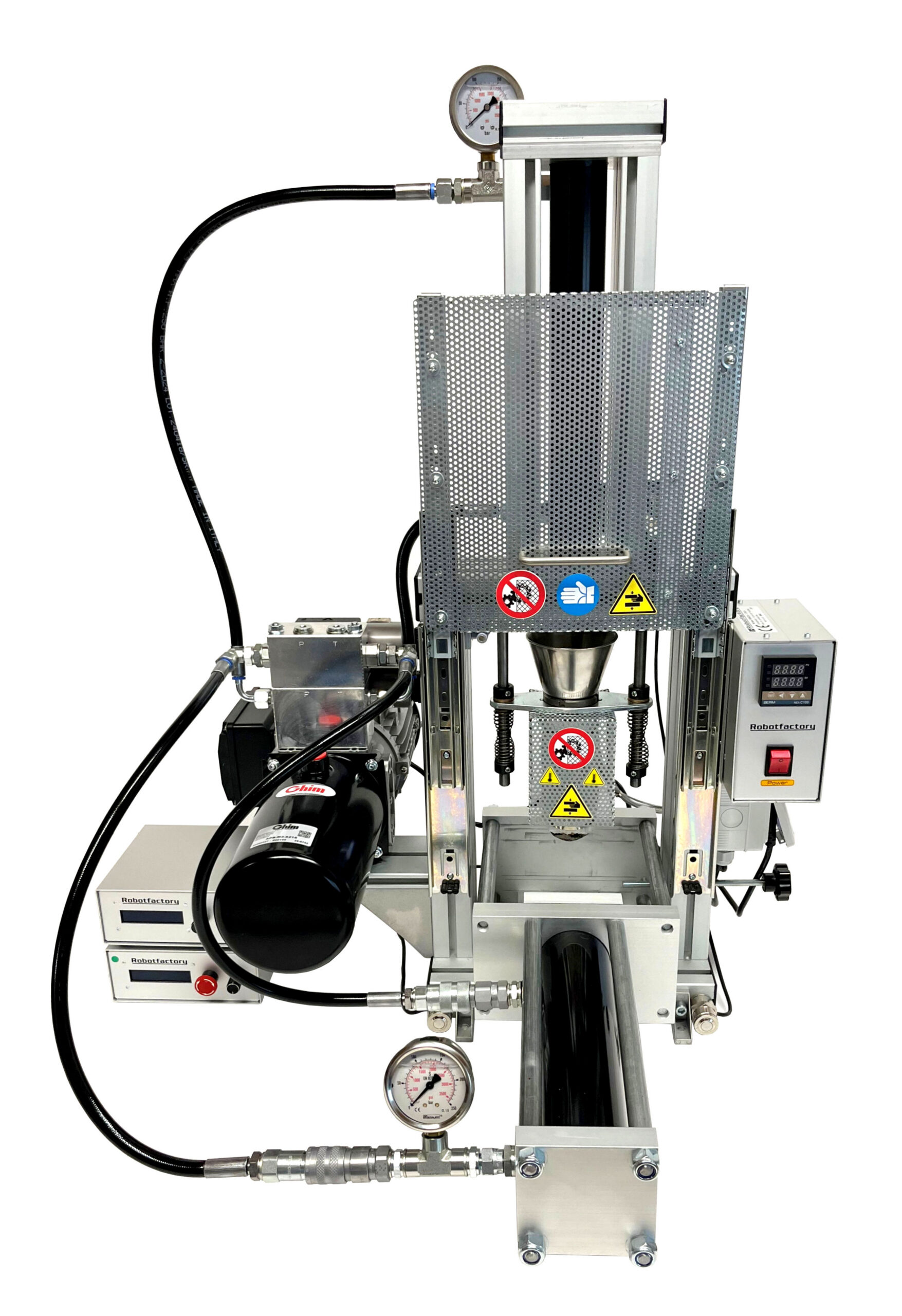
Oleodynamic Injection Molding.
“This pneumatic system represented the first step towards democratizing Injection Molding. Powered by compressed air, it can handle volumes up to 32 cm³ with an injection force generated by a 63 mm diameter cylinder,” he explained. “Subsequently, as a natural evolution of pneumatic 3D printing Injection Molding technology and in response to the growing demand for larger and larger volume Injection Molding of materials, we developed the new Oleodynamic Injection Molding 3D printing system.”
That system now has a manual and an automated version. These systems now have a “hydraulic pump that delivers up to 1,900 kg of extrusion force and a clamping force of up to 4 tons with a 100 cm³ injection chamber.”
“The new systems address the growing need to produce larger objects with greater process control.With this new offering, Robot Factory confirms its commitment to making industrial technologies accessible, bringing them closer to the world of 3D printing, design, and digital manufacturing.”
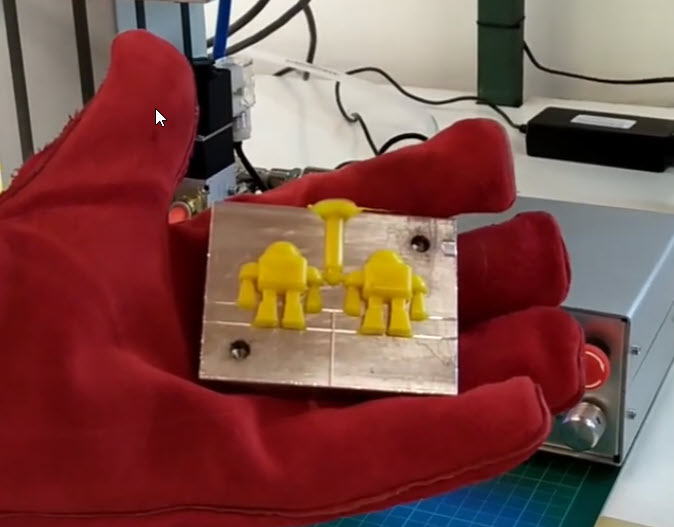
Some small injection-printed objects.
Robot Factory’s injection molding machines are used for training, small series production, materials testing, iterations of production runs, improving mold designs for final production, and production runs themselves. With the small units, you can get precise control and quick iterations, which is perfect for students, researchers, small runs, and quick turnaround. The machines are now used in consumer electronics, medical devices, packaging, and industrial components. The company also makes handling and automation tools that can make a line produce tens of thousands of parts.
Customers use the systems up to 350C, usually with PP, PE, PC, PA, and PET, as well as engineering plastics and GF-reinforced materials. Customers also use regrind. The company has also made a shredder that can have you recycle materials in-house.
I really like Robot Factory’s belt, regular FDM, and SLA systems. There’s a built-tough, built-to-last quality about them that I find absent from the rest of our industry. Now, with a pivot to injection molding, the company is again making well-crafted, industrial bench-top equipment that can be used intensively in production but also in R&D. I think we, as an industry, need to look more closely at Robot Factory and do more with injection molding, while also making higher-quality machines.
Images courtesy of Robot Factory
Subscribe to Our Email Newsletter
Stay up-to-date on all the latest news from the 3D printing industry and receive information and offers from third party vendors.
Upload your 3D Models and get them printed quickly and efficiently.