 Varun
Varun
Reshoring sounds straightforward: bring production back home. In practice, it’s far more complex.
According to recent research by Hexagon in 2025, about 36% of U.S. manufacturing leaders are actively looking to reshore production domestically in response to shifting trade policy. At the same time, 28% believe workforce shortages could slow or significantly delay those efforts. The appetite for localized production is growing, but so are the structural challenges.
Manufacturers today are navigating fragile supply chains, extended tooling timelines, geopolitical instability, and growing concerns around intellectual property exposure. Simply recreating yesterday’s production model on domestic soil doesn’t address those vulnerabilities.
What many organizations are recognizing instead is that localized production requires a different kind of infrastructure, one that is more agile, more digital, and less dependent on traditional tooling. Increasingly, additive manufacturing is playing a central role in that evolution.
Reshoring Without Rebuilding the Past
For decades, manufacturing efficiency depended on scale. Tooling investments (molds, dies, casting systems, and fixtures) made economic sense when producing high volumes of identical parts. That model still works in automotive and other mass-production environments.
But many reshoring initiatives today are not driven by automotive-style volumes. They’re driven by low-to-medium production volumes, shorter lead-time expectations, aging parts catalogs, and the need to keep sensitive designs closer to home. In aerospace and defense, for example, production volumes are often relatively small across broad portfolios of components. In medical manufacturing, customization is increasingly the norm. In industrial equipment, replacement components may be needed years after the original supplier has exited the market.
In that environment, flexibility matters more than scale.
When volumes are limited and demand is unpredictable, the tooling process itself becomes the bottleneck. The time and cost required to design, validate, and stand up molds or fixtures can erode the economic viability of producing parts domestically — especially if that tooling may only be used a handful of times.
Additive manufacturing removes that constraint. By moving directly from a validated digital model to production, manufacturers can bypass lengthy tooling cycles and produce complex geometries without standing up dedicated infrastructure. That shift fundamentally changes the calculus for reshoring lower-volume or high-mix parts.
Instead of asking, “Can we afford to tool this domestically?” the question becomes, “Can we produce this efficiently without tooling at all?”
From Global Fragility to Local Agility
COVID-19 exposed how dependent many supply chains had become on long, geographically dispersed networks. Components once considered routine suddenly carried lead times measured in months.
Even as logistics stabilized, new pressures emerged. Tariffs, shifting trade relationships, and national security considerations have pushed manufacturers to reassess how and where sensitive components are produced.
Proximity alone is not the objective. Strategic control is.
Keeping digital part definitions within secure domestic environments reduces exposure to external risk. Rather than transferring tooling or proprietary designs across multiple international suppliers, companies can centralize or selectively distribute encrypted digital files within trusted networks.
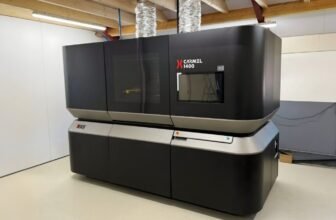
We are also seeing distributed production models take shape. Additive systems are increasingly deployed alongside production lines to manufacture custom jigs, fixtures, and tooling elements on demand. In some field environments, from energy sites to remote operations, localized printers reduce downtime by eliminating dependence on global logistics chains.
In high-stakes industries such as aerospace, defense, and energy, where downtime can cost millions per day, waiting weeks for a replacement component is often not an option. Localized additive production dramatically shortens that gap.
The common thread is resilience. Shorter supply loops and greater digital control reduce exposure to disruptions that manufacturers cannot predict but must be prepared for.
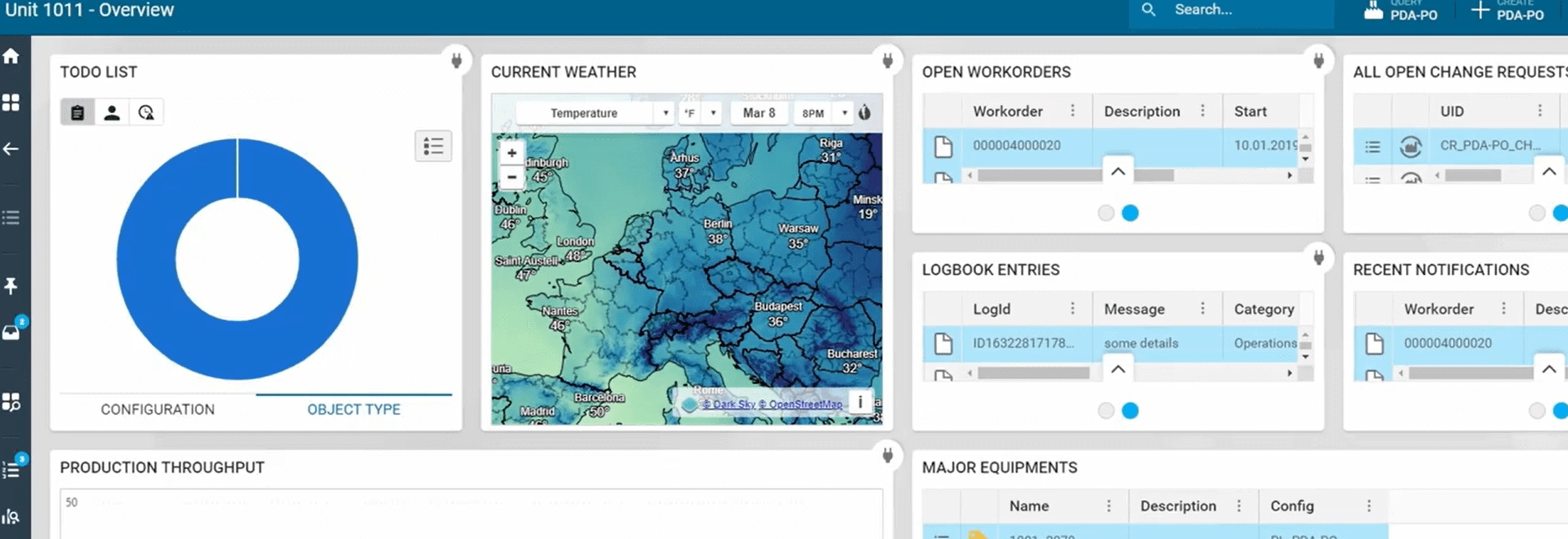
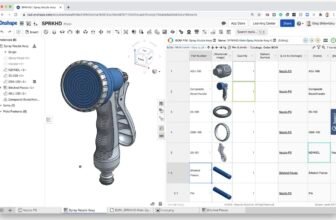
Digital workflows enable on-demand production and distributed manufacturing. Image courtesy of Hexagon.
Reinventing Spare Parts Through Digital Inventory
One of the clearest reshoring wins for additive manufacturing is spare parts, particularly when the original tooling is gone, the supplier has consolidated or disappeared, or the required volume is too small to justify restarting a conventional process.
Manufacturers frequently support products for years or even decades after primary production ends. Tooling may have been scrapped. Supply contracts may have expired. Restarting conventional production for a limited batch is often inefficient, slow, and disproportionately expensive.
That’s where additive changes the equation.
Instead of rebuilding tooling for a small run, manufacturers can maintain validated digital part definitions and produce components on demand. A replacement bracket, custom fixture, or structural mounting component can be printed locally, without waiting weeks or months for global supply chains to respond.
In some cases, additive systems are even deployed alongside production equipment to manufacture replacement tooling or end-of-arm components in real time, minimizing downtime and keeping operations moving.
This digital inventory model reduces warehousing costs, shortens lead times, and mitigates supplier obsolescence risk. In aerospace and energy, it can prevent costly operational downtime. In defense-related environments, it reduces reliance on offshore suppliers for mission-critical components.
In this context, reshoring is about restructuring the supply chain itself: shifting from tooling-heavy, inventory-dependent systems to digitally enabled, on-demand production networks.
What Reshoring with Additive Demands
Additive manufacturing is powerful, but it is not universal. Reshoring with additive only works when manufacturers approach it with discipline.
Cost is more nuanced than eliminating tooling. Equipment acquisition, material inputs, energy consumption, maintenance, and scrap all factor into the equation. Without simulation and build optimization, inefficiencies can quickly erode return on investment.
Throughput must also be evaluated realistically. For very high-volume production runs, traditional manufacturing processes often remain more efficient. Additive’s strengths lie in complex, lower-volume applications where design freedom delivers measurable performance or economic advantage.
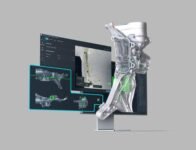
Inspection capability must evolve alongside production capability. Additive parts frequently contain internal channels, lattice structures, or hollow geometries that cannot be fully evaluated using traditional optical methods. In safety-critical applications, advanced inspection technologies, such as computed tomography (CT), are often required to verify internal integrity and detect hidden defects.
Printing capability and inspection capability must mature together. Without that alignment, resilience gains can be undermined by quality uncertainty.
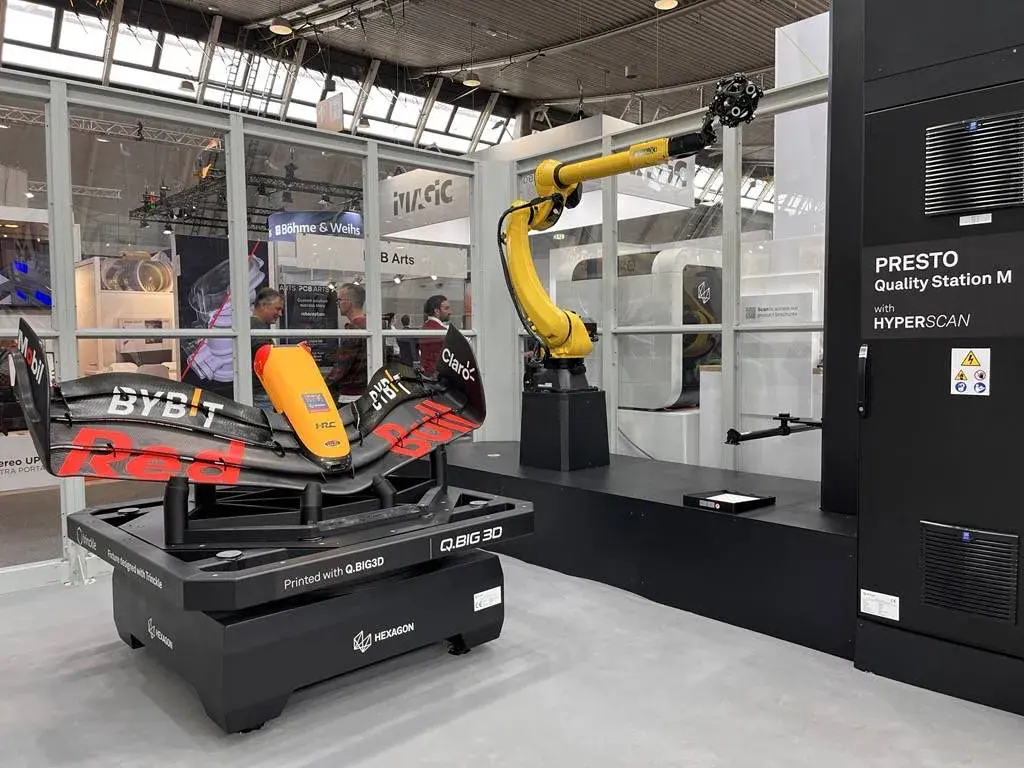
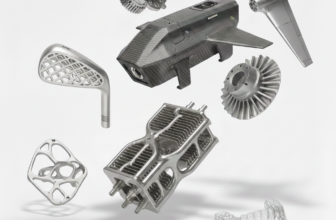
Hexagon technologies used to support digital manufacturing and localized production environments. Image courtesy of Hexagon.
Building Capability for the Long Term
As reshoring strategies expand, so does the need for skilled talent.
Additive manufacturing requires digital design fluency, process control expertise, and advanced metrology knowledge. Universities and technical institutes are investing heavily in additive and digital manufacturing programs to build the next generation of engineers and technicians.
Technology alone does not create resilience. It is the combination of digital tools, inspection rigor, and trained professionals that enables manufacturers to deploy additive strategically rather than experimentally.
Printing Resilience into the Supply Chain
Reshoring in 2026 is not about recreating yesterday’s factory footprint. It is about building adaptable, digitally connected production ecosystems that can respond to uncertainty.

Roger Wende. Image courtesy of Hexagon.
Additive manufacturing will not replace conventional processes. But in the right applications — low-to-medium volumes, complex geometries, IP-sensitive components, and spare parts — it provides manufacturers with a powerful lever to strengthen domestic capability.
Resilience today is measured not only by geography but also by flexibility, control, and responsiveness.
In many cases, those qualities are being printed.
About the Author:
Subscribe to Our Email Newsletter
Stay up-to-date on all the latest news from the 3D printing industry and receive information and offers from third party vendors.
Upload your 3D Models and get them printed quickly and efficiently.