Bambu Lab 3D Printers Bring a 166-Million-Year-Old Dinosaur Back to Life – 3DPrint.com
 Varun
Varun
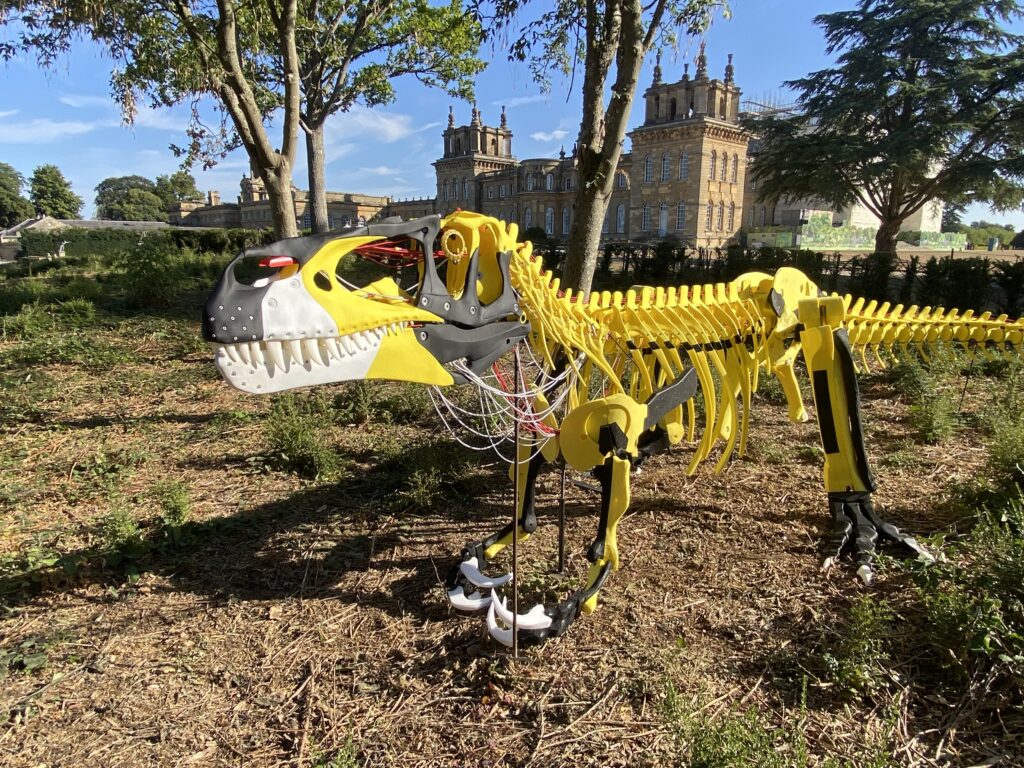
Fourteen desktop 3D printers spent seven weeks producing the bones of a dinosaur that lived roughly 166 million years ago. The result is now on display at Blenheim Palace in England, where five nine-meter-long Megalosaurus sculptures have taken over the grounds as part of a new outdoor exhibition called Dinosaurs Are Forever.
-

- One of five nine-meter-long Megalosaurus sculptures on display at Blenheim Palace in Oxfordshire, England. Image courtesy of Bambu Lab.
-
- 3D printed Megalosaurus sculptures from Jay Jay Burridge’s Dinosaurs Are Forever exhibition at Blenheim Palace. Image courtesy of Bambu Lab.
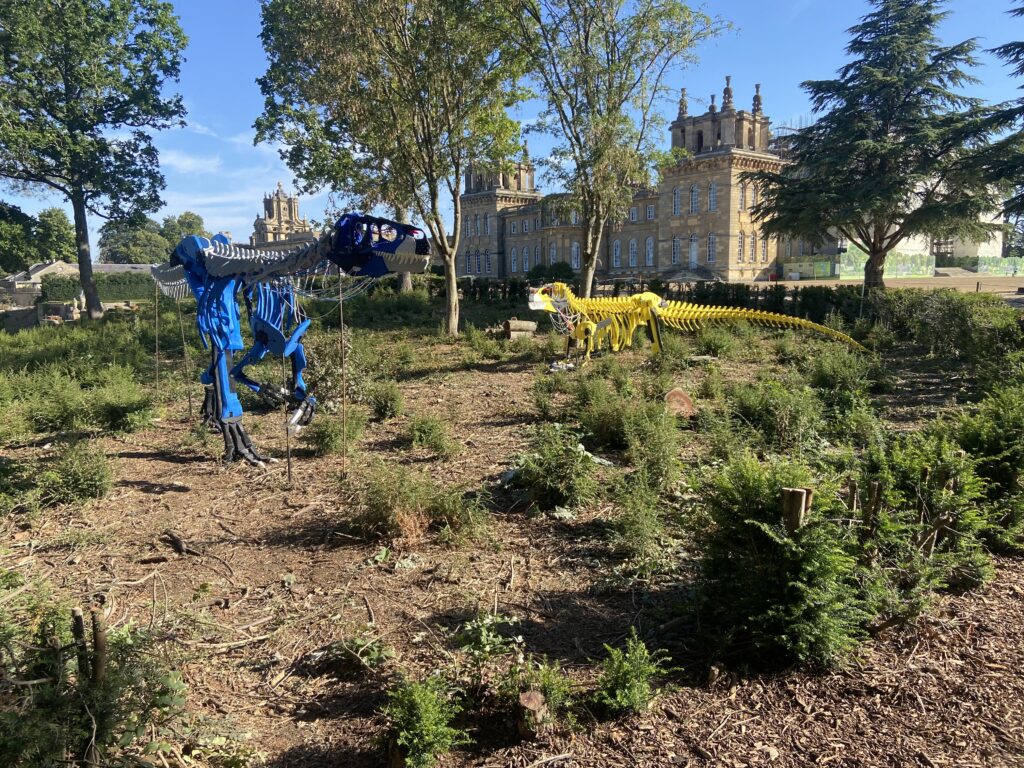
British artist Jay Jay Burridge created the installation through his studio Future Fossils. But rather than carving all of the enormous skeletons by hand or producing them with traditional fabrication methods, the team turned to 3D printing.
To produce the 3D printed bones, Future Fossils worked with Gerard Shields of UK additive manufacturing firm Printpool. Shields used 14 Bambu Lab printers running over seven weeks to make Burridge’s redesigned bones in ABS-GF, an ABS filament reinforced with glass fiber. After printing, the parts were sent to the Future Fossils workshop for final finishing and assembly.
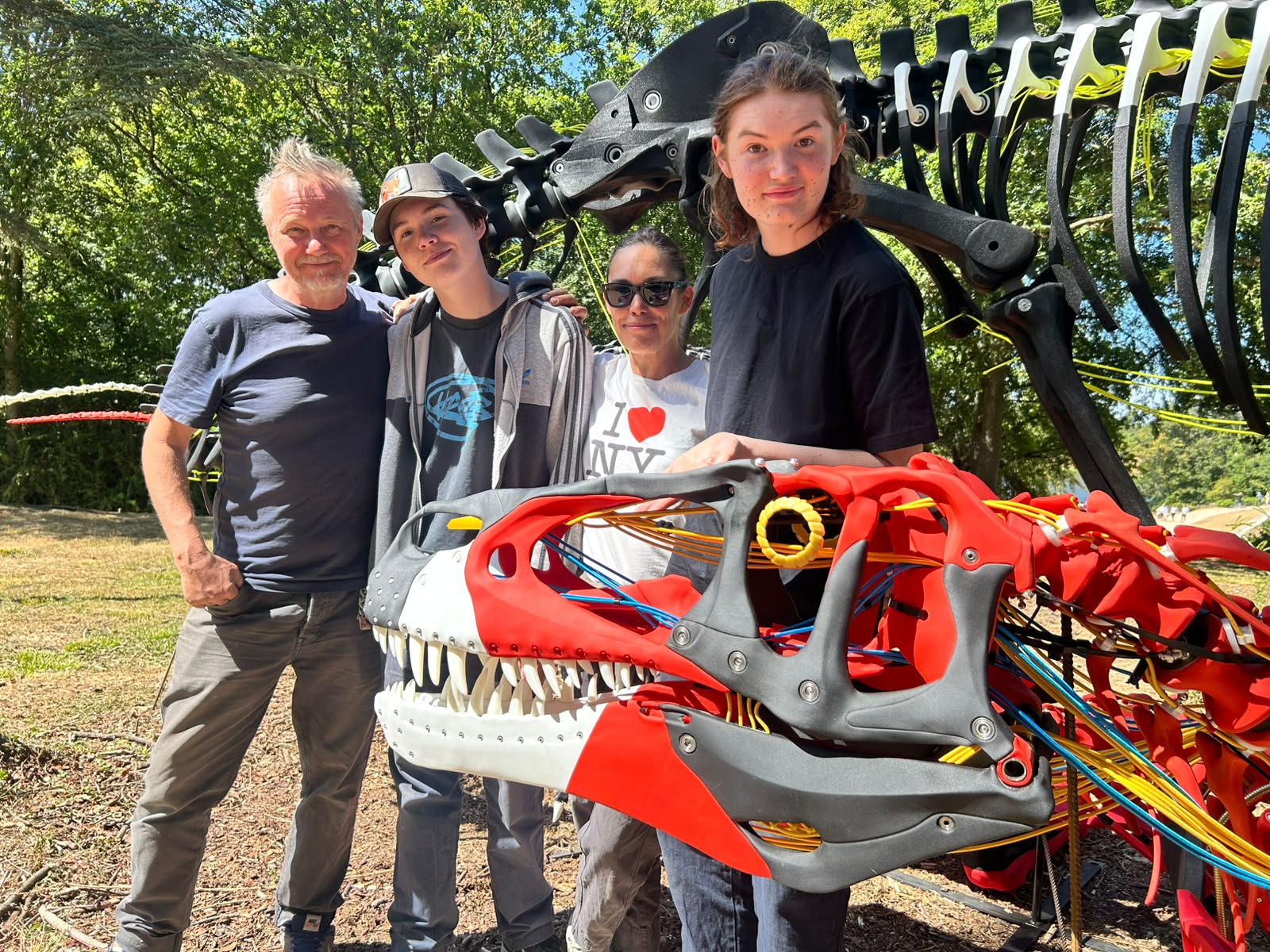
Jay Jay Burridge’s Megalosaurus sculptures at the Dinosaurs Are Forever exhibition at Blenheim Palace. Image courtesy of Bambu Lab.
Printing the dinosaur that started it all
The project is a particularly fun use of desktop 3D printing because of the dinosaur it recreates. Megalosaurus holds an important place in paleontology. Fossils found in Oxfordshire were studied by geologist William Buckland, who formally named the animal in 1824.
It became the first dinosaur to receive a scientific name, although nobody called it a dinosaur at the time. The term “Dinosauria” would not be introduced until 1842. Now, more than 200 years later, Megalosaurus has returned to Oxfordshire in a very different way.
“It’s perfectly logical that dinosaurs of the future should be 3D printed,” Burridge said. “We’re taking creatures from 166 million years ago and rebuilding them with the technology of today.”
-

- Rows of 3D printed vertebrae produced for the five Megalosaurus sculptures. Image courtesy of Bambu Lab.
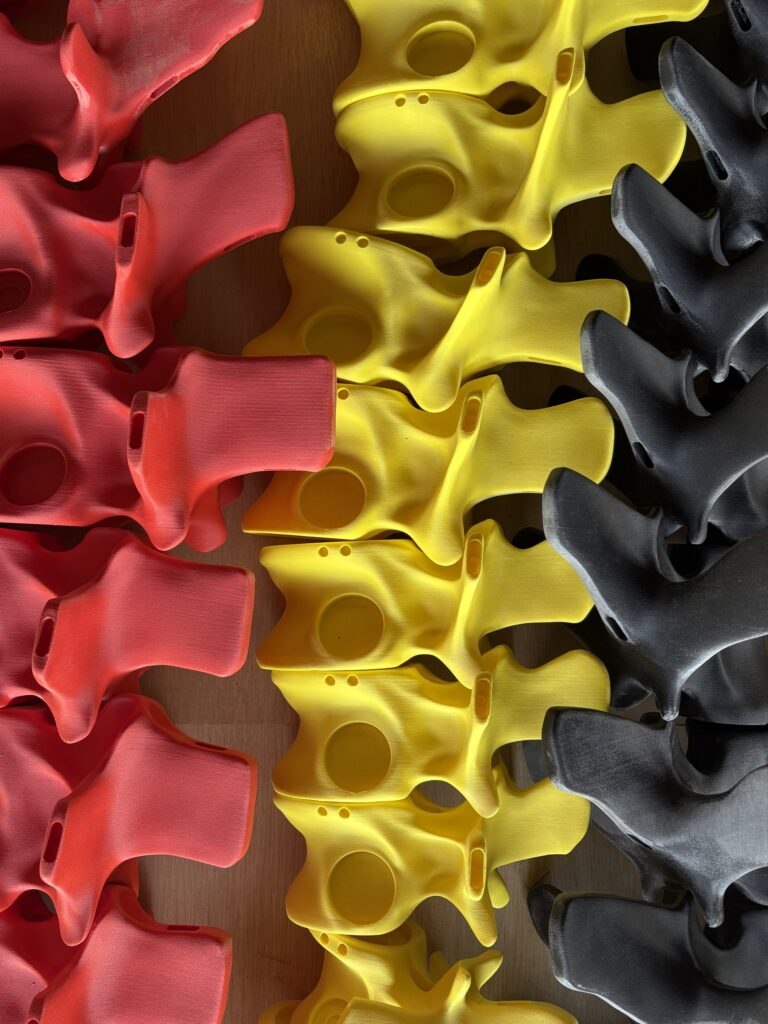
-
- 3D printed vertebrae produced for the Megalosaurus sculptures before final assembly. Image courtesy of Bambu Lab.
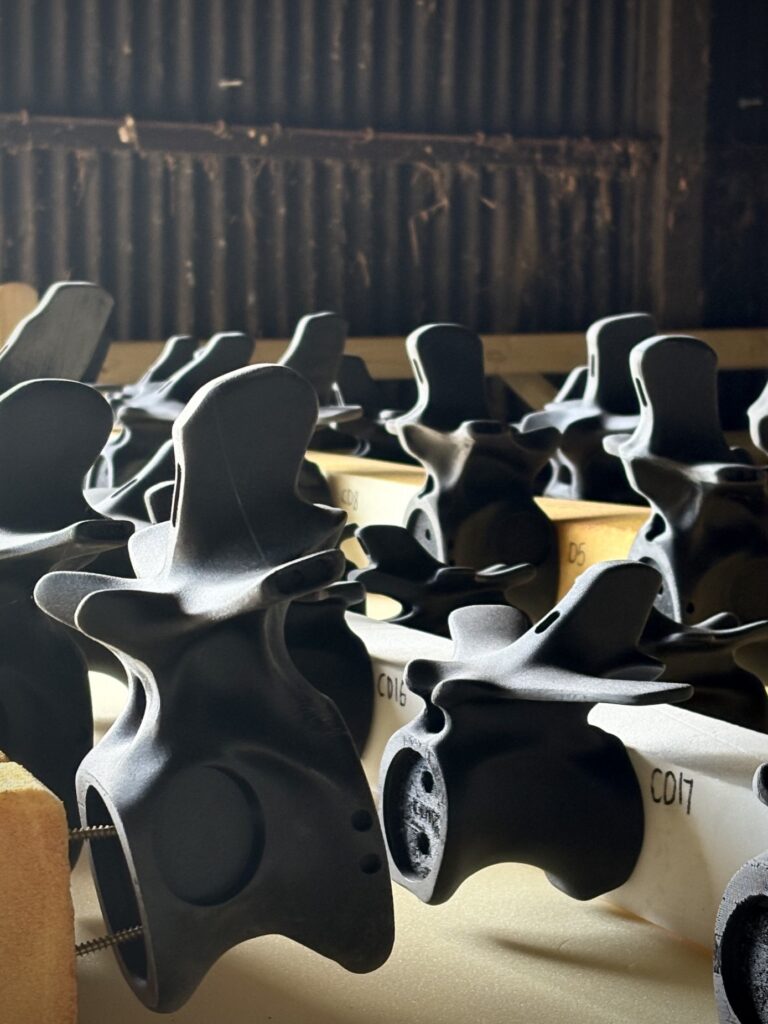
-
- 3D printed vertebrae produced for the Megalosaurus sculptures before final assembly. Image courtesy of Bambu Lab.
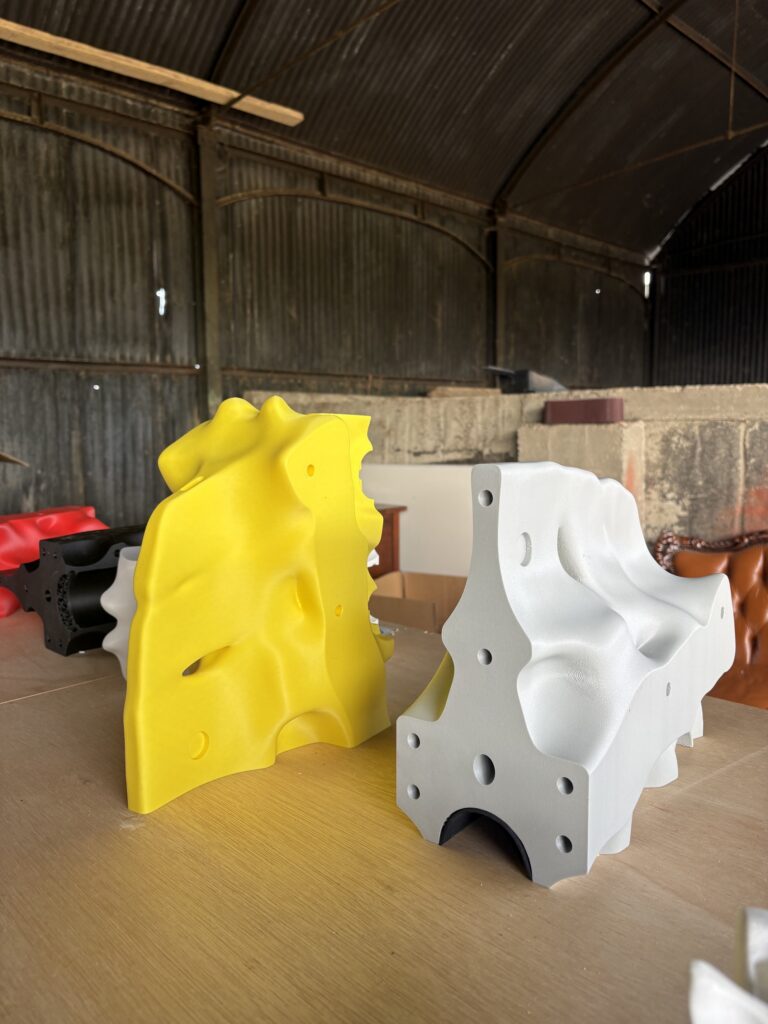
These aren’t meant to be conventional museum skeletons. Burridge worked with Dr. Matt Dempsey, a musculoskeletal biologist, vertebrate paleontologist, and scientific illustrator who completed his PhD with the University of Liverpool and London’s Natural History Museum. Together, they developed a new interpretation of Megalosaurus based on its fossils and evidence from closely related dinosaurs.
From there, Burridge took the designs beyond a traditional dinosaur reconstruction. The finished sculptures mix science, art, and engineering, with skeletons that look part dinosaur and part machine. Each is built around a lightweight movable frame, with individual bones that were either 3D printed or carved by hand.
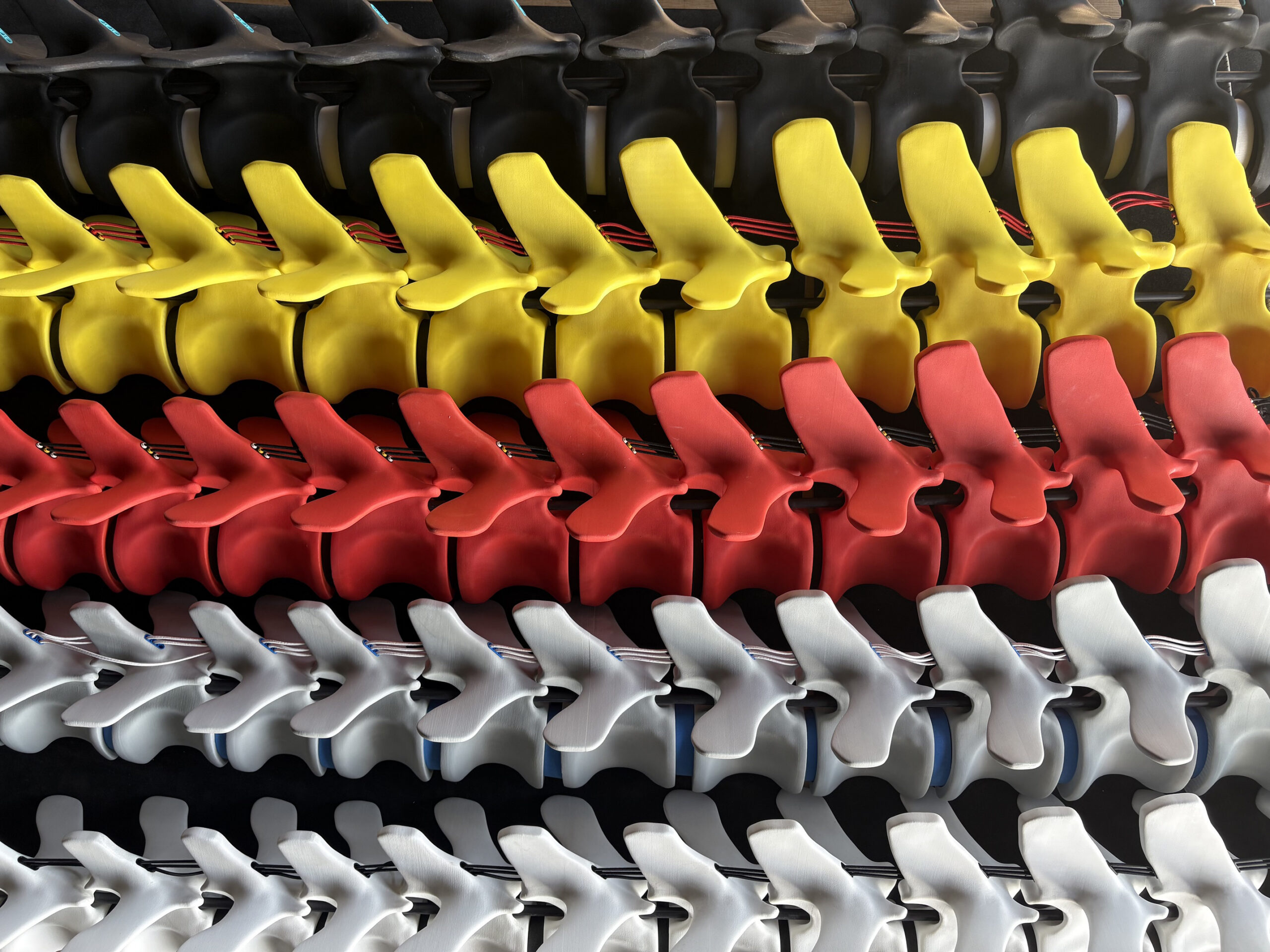
Rows of 3D printed vertebrae produced for the five Megalosaurus sculptures. Image courtesy of Bambu Lab.
From a desktop printer to a nine-meter dinosaur
What stands out is that the project didn’t require a large industrial 3D printer. Instead, Printpool used desktop machines to produce parts that could later be brought together into sculptures far bigger than the printers themselves. It’s a great example of how a print farm can scale up for a large project.
“Supporting the first-ever 3D-printed reconstruction of Megalosaurus — the world’s first discovered dinosaur — is a powerful example of how modern technology can bring ancient stories to life,” said Nadia Yaakoubi, Bambu Lab’s head of PR and communications.
The location also brings the story full circle. Blenheim Palace is in Oxfordshire, where the original Megalosaurus fossils were found. And dinosaurs are still making news there. More recently, a huge set of dinosaur tracks was uncovered at Dewars Farm Quarry near Bicester.
Two hundred years after Oxfordshire introduced the world to Megalosaurus, visitors can now walk beneath a nine-meter version of it.
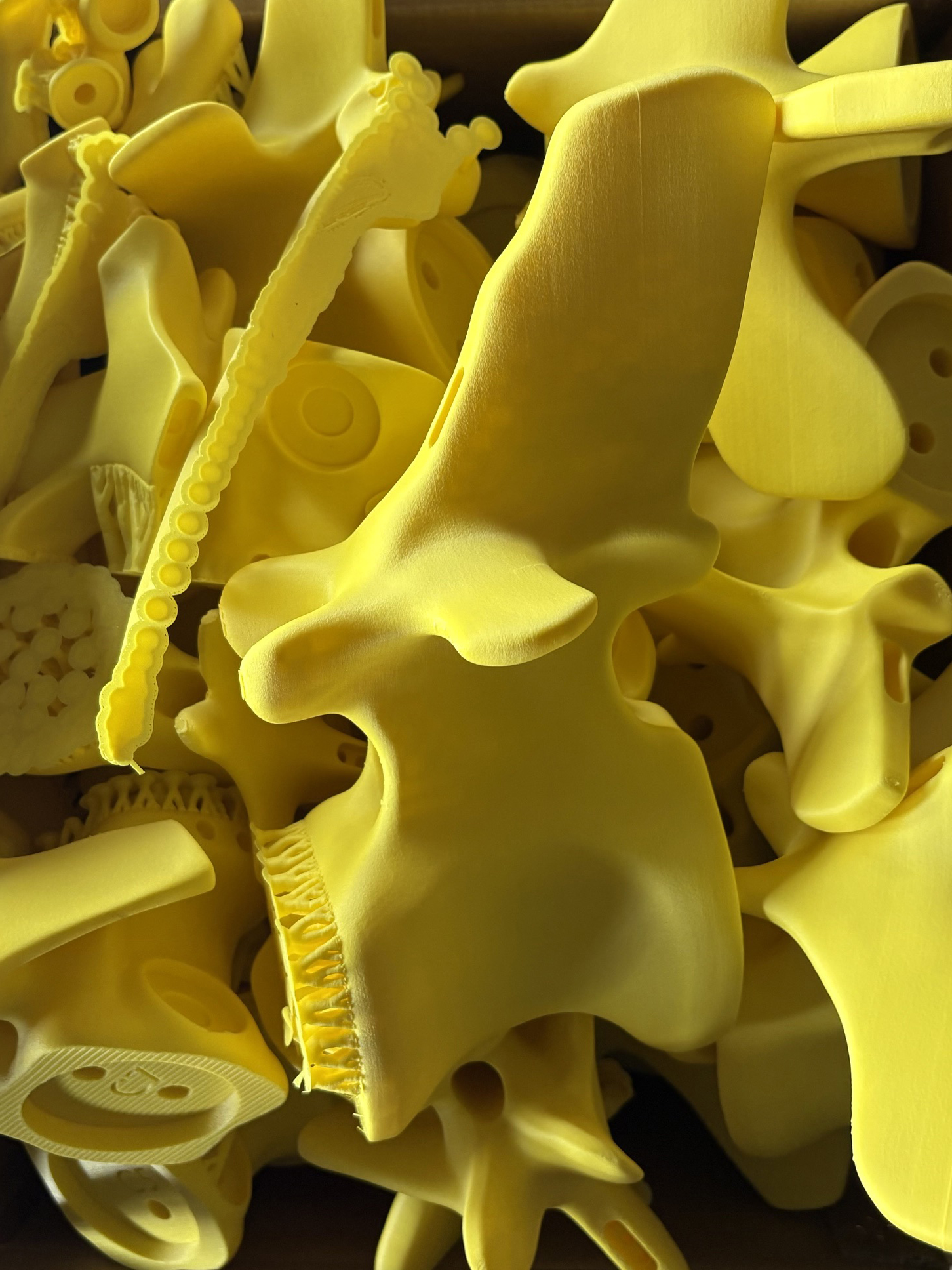
3D printed vertebrae produced for the Megalosaurus sculptures before final assembly. Image courtesy of Bambu Lab.
Dinosaurs Are Forever runs through November 1, 2026, in the gardens at Blenheim Palace. The five Megalosaurus sculptures are making their public debut there, and the exhibition is included with a Park & Gardens ticket or Annual Pass. Visitors who want to see the real thing can also head to the Oxford University Museum of Natural History, where the original Megalosaurus fossils are on display.
Subscribe to Our Email Newsletter
Stay up-to-date on all the latest news from the 3D printing industry and receive information and offers from third party vendors.
Upload your 3D Models and get them printed quickly and efficiently.