Rheinmetall Uses Ducting Made with Minifactory for Challenger 3 Tanks – 3DPrint.com
 Varun
Varun
Rheinmetall UK is using Minifactory Material Extusion as the primary production method for tank ducting on the Challenger 3 Main Battle Tank program. The Challenger 3 is the UK’s formidable main battle tank upgrade program, converting 148 Challenger 2 tanks into Challenger 3s. Some modified Challenger 2s are serving Ukraine well, described as accurate and firing 8 rounds per minute.
Improvements to the turret, hull, armor, a new smoothbore gun, and a new complementary sabot round should update it and make it even better. The tank will also have a better Active Protection System, better engines, better sights, better air filtration, new fire control computers, and more. Generally, the new Challenger will get a lot more electronics kit than the 2, which first entered service in 1998 and was designed in the early nineties. A lot of that new kit requires ducting.
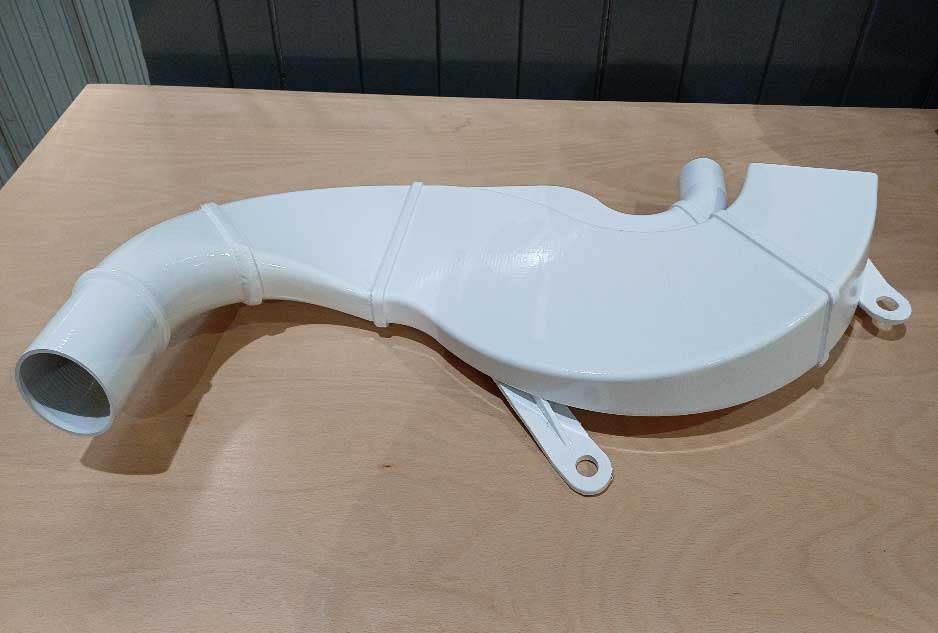
MiniFactory air ducting.
Rheinmetall UK is now exclusively making that ducting using ULTEM 9085 and the miniFactory Ignite. As we’ve seen in the Boeing case, where all current Boeing passenger aircraft have 3D printed ducts, ducting is an ideal use case for additive manufacturing. Boeing has used 3D printed ducting for years. The 787 Dreamliner became one of the best-known examples, as suppliers were able to combine multiple duct components into lighter, single-piece assemblies. Companies such as Nordam, Thermwood, and Stratasys have supplied 3D printed ducting for Boeing programs. Modern ducting is complex and often has to curl and curve in all sorts of ways. This means that parts need complex molds (or other processes) or must be made from many parts (requiring more tooling and more steps).
What’s more, you then have to stick these parts together, which adds additional steps. And there are, as a result, new dependencies, “will my glue eat away my polymer,” or “how will my glue react in freezing temperatures.” More tooling costs and more parts to have on hand also increase complexity and the up-front investment in manufacturing. And you may have to make hundreds or thousands of parts to store them as spares. With additive, a complex part can be made in one piece and optimized for airflow, weight, or what have you.
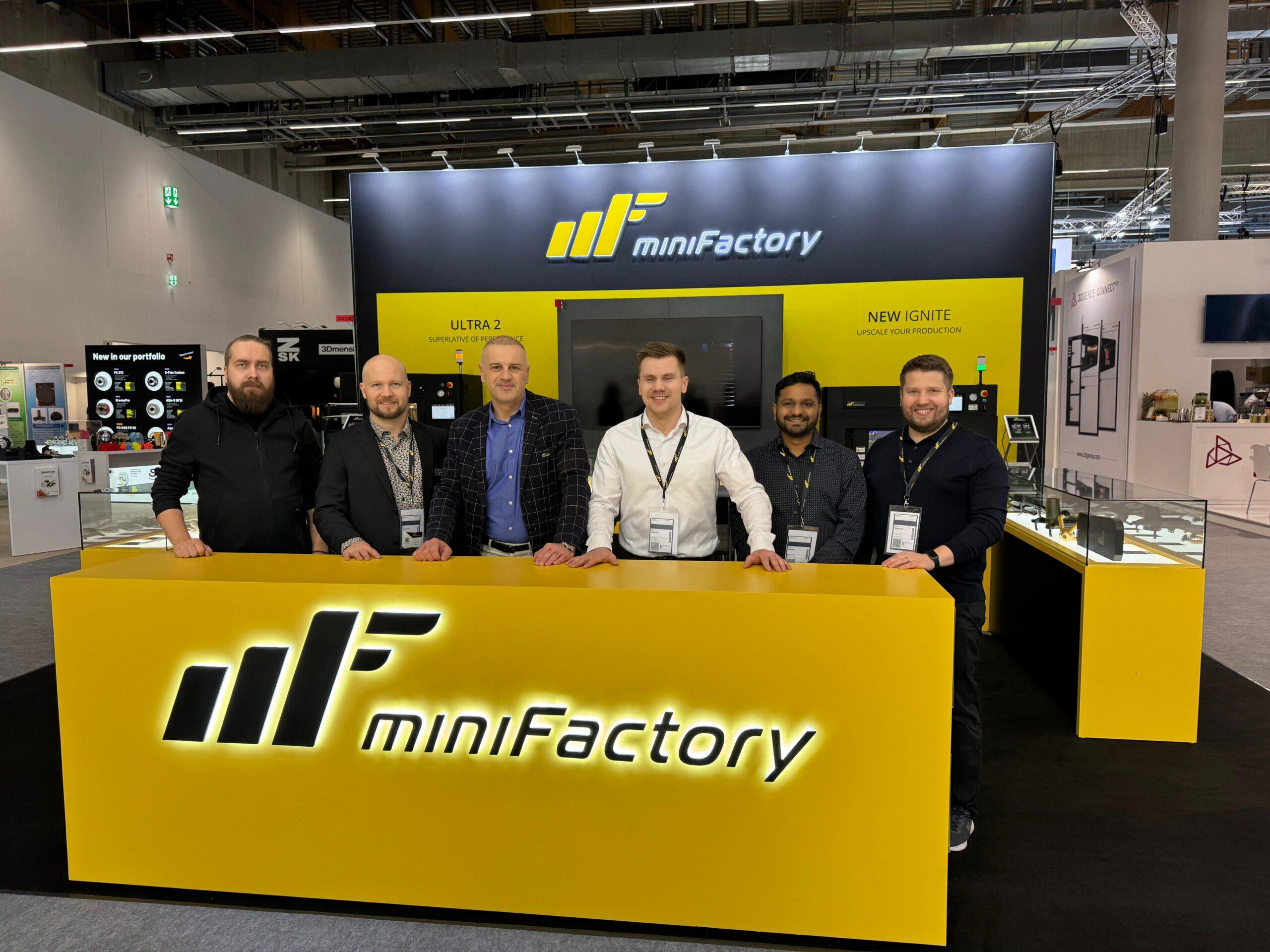
The miniFactory team.
In this case, lead times were also an issue, as were evolving requirements. The latter is not often mentioned but is a daily reality on many projects. The company says the project saved money, enabled daily design changes, reduced tooling, and lowered up-front costs.
Julian Wright, Technology Programmes Manager at Rheinmetall UK, said,
“Additive Manufacturing is now the baseline solution for ducting manufacture in the Challenger 3 programme. The technology has enabled rapid design iteration, allowing us to implement design changes and produce replacement parts within a day. Beyond cost savings, the biggest benefits have come from reduced programme risk, improved cash flow through on-demand production, and the ability to continuously optimise both the product and the manufacturing process.”
miniFactory’s Chief Development Officer, Riku Hietarinta, added,
“The real success story is not the printer. The success story is that additive manufacturing is now delivering measurable value in production for one of the UK’s most important defence programmes. Success comes from understanding the customer’s challenges and building the right manufacturing solution together. When adoption happens the right way, the results speak for themselves.”
The company is also seeing its 3D printers used more widely within the company and says that, for Rheinmetall UK, “additive manufacturing has become an increasingly important part of the company’s long-term manufacturing strategy.”
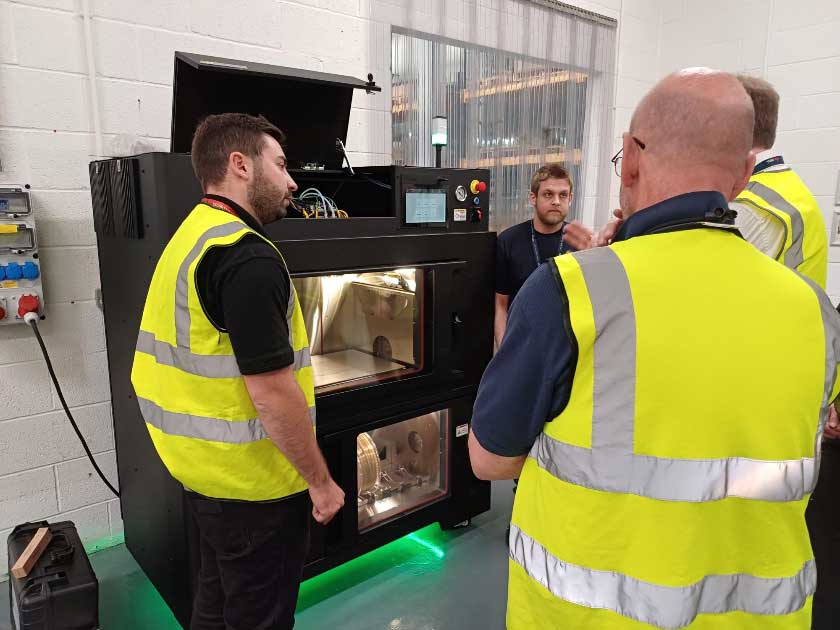
Rheinmetall miniFactory on-site.
I love this story so much because it’s actual manufacturing. Ducting is a good case, and many have known this for a long time. But perhaps being a bit boring, we don’t talk about it enough. It’s not boring; it’s very valuable for companies. The flexibility and costs of this are very beneficial. And as we can see here, things such as changing requirements are a reality, and in a mold-driven world (can we say moldy world?), they can wreak havoc on projects. With 3D printing, in this case, we free up money, lower investment, and reduce risk. This is a great example in an important application, and I hope that many more such cases will emerge.
Images courtesy of Rheinmetall
Subscribe to Our Email Newsletter
Stay up-to-date on all the latest news from the 3D printing industry and receive information and offers from third party vendors.
Upload your 3D Models and get them printed quickly and efficiently.